BMW Museum & BMW Welt
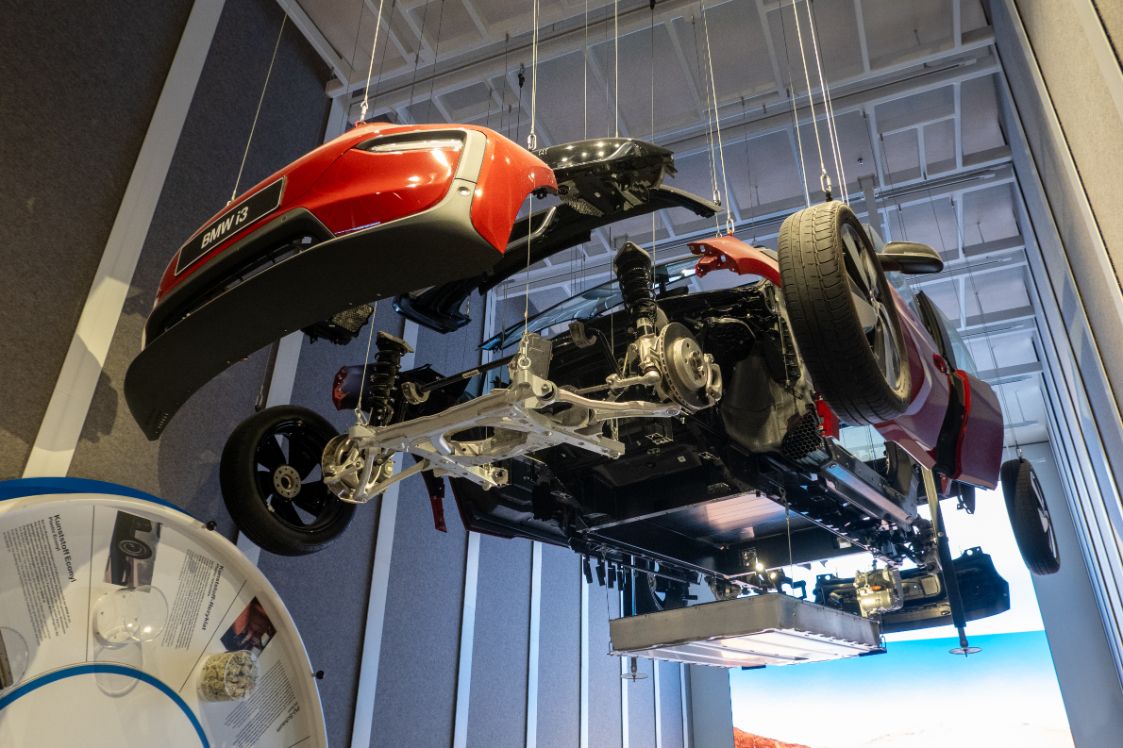
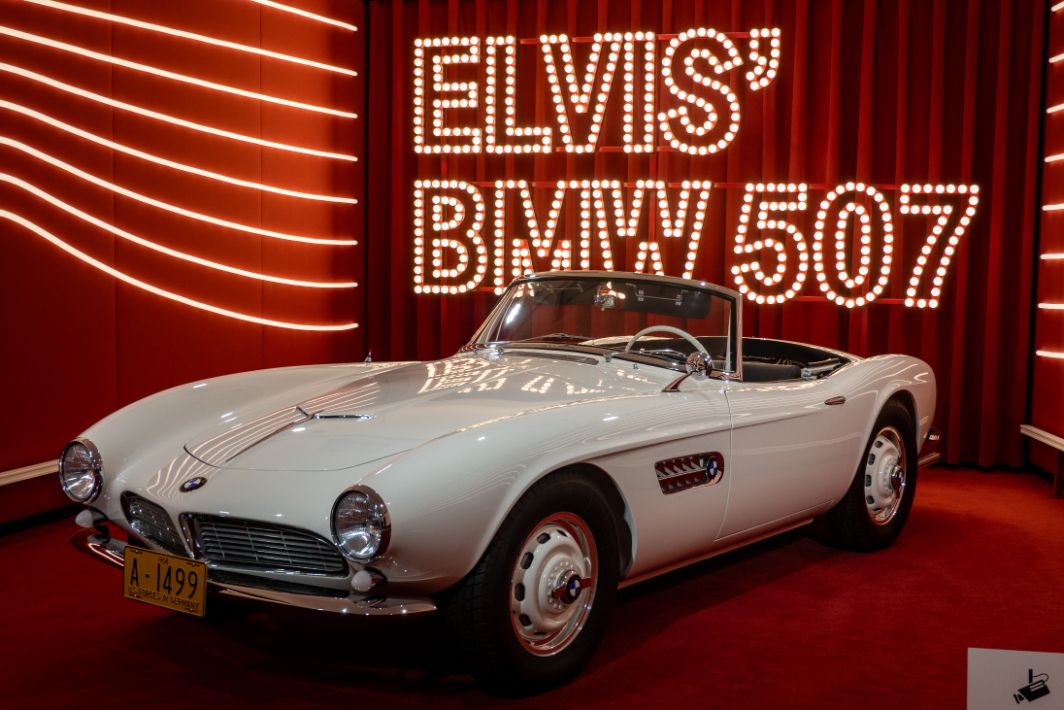
Neither of us are particularly into cars but visiting the BMW Museum is kind of The Done Thing™ so we duly took the U-Bahn up to Olympiazentrum to put lots of vehicles into our eyeholes. BMW Welt is just kind of a showroom and is free to enter. If you like looking at shiny vehicles this is for you. The museum has an entry fee and covers the history of the company from when it used to build aeroplane engines right up until the car it’s known for today driven by people with an inability to indicate and roughly zero concept of a safe braking distance. It’s a surprisingly entertaining way to kill a couple of hours. We were most impressed.
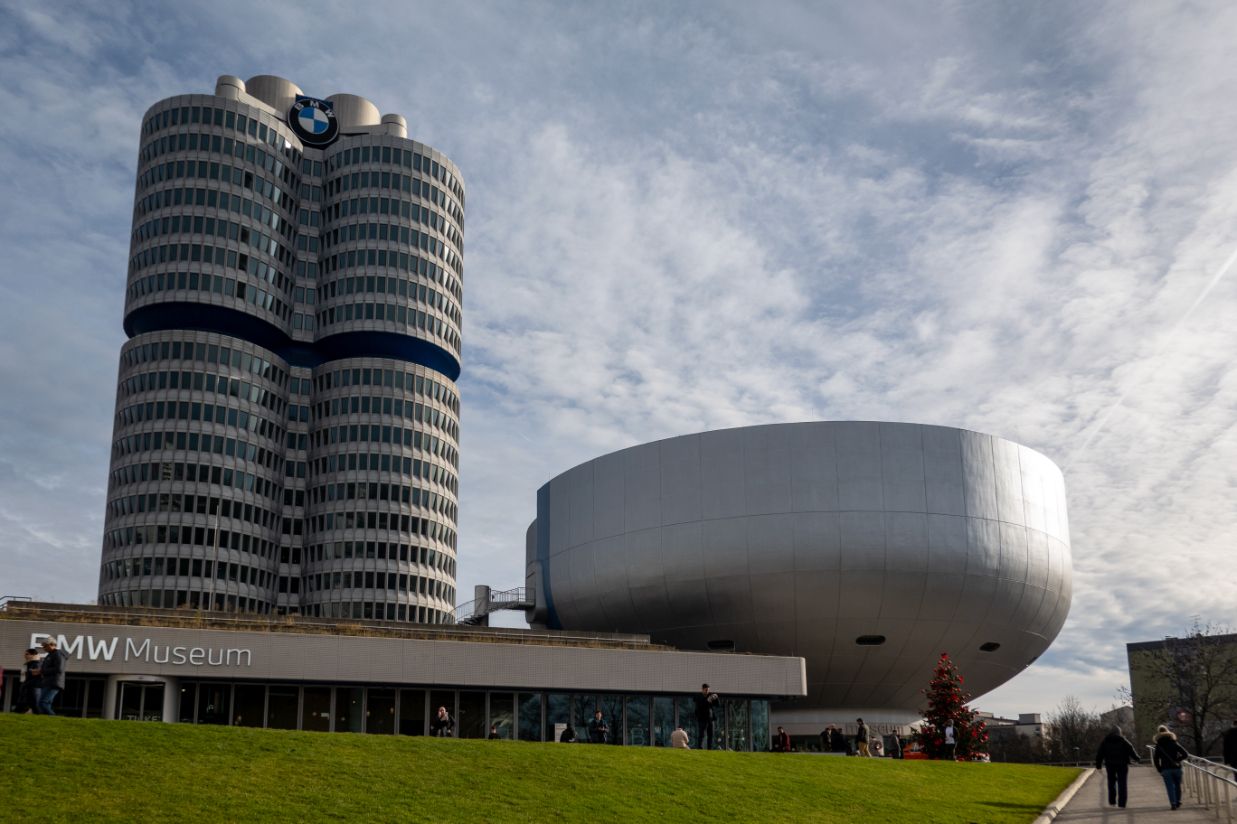
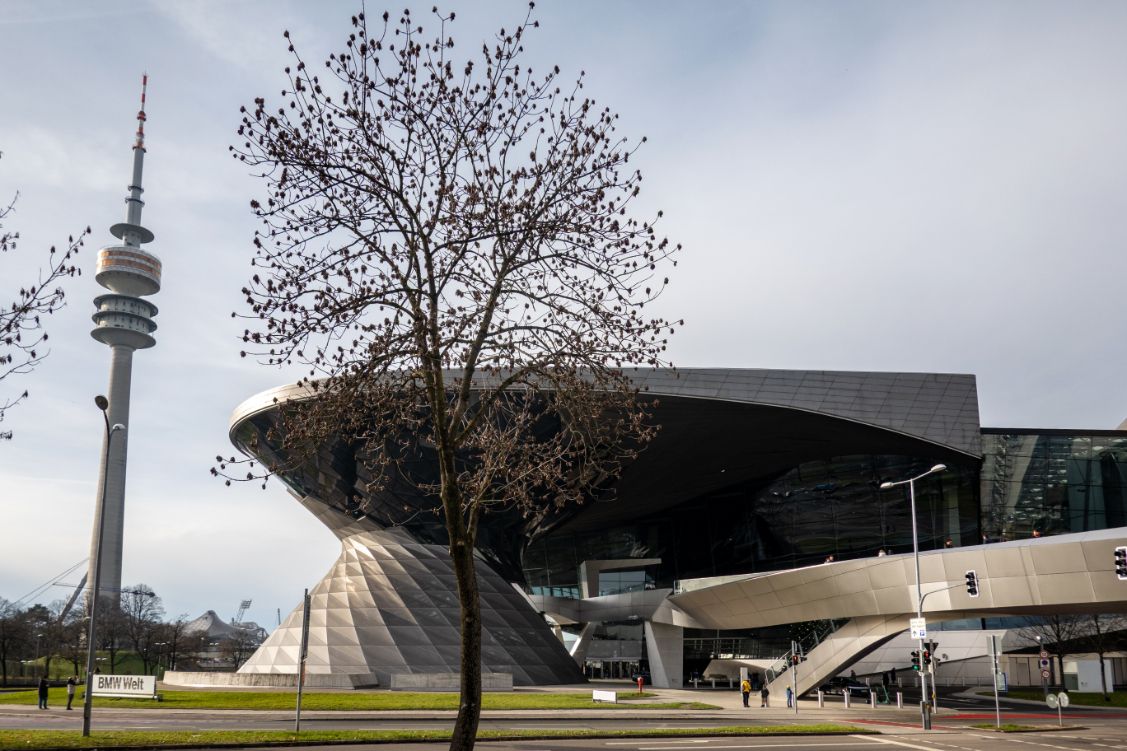
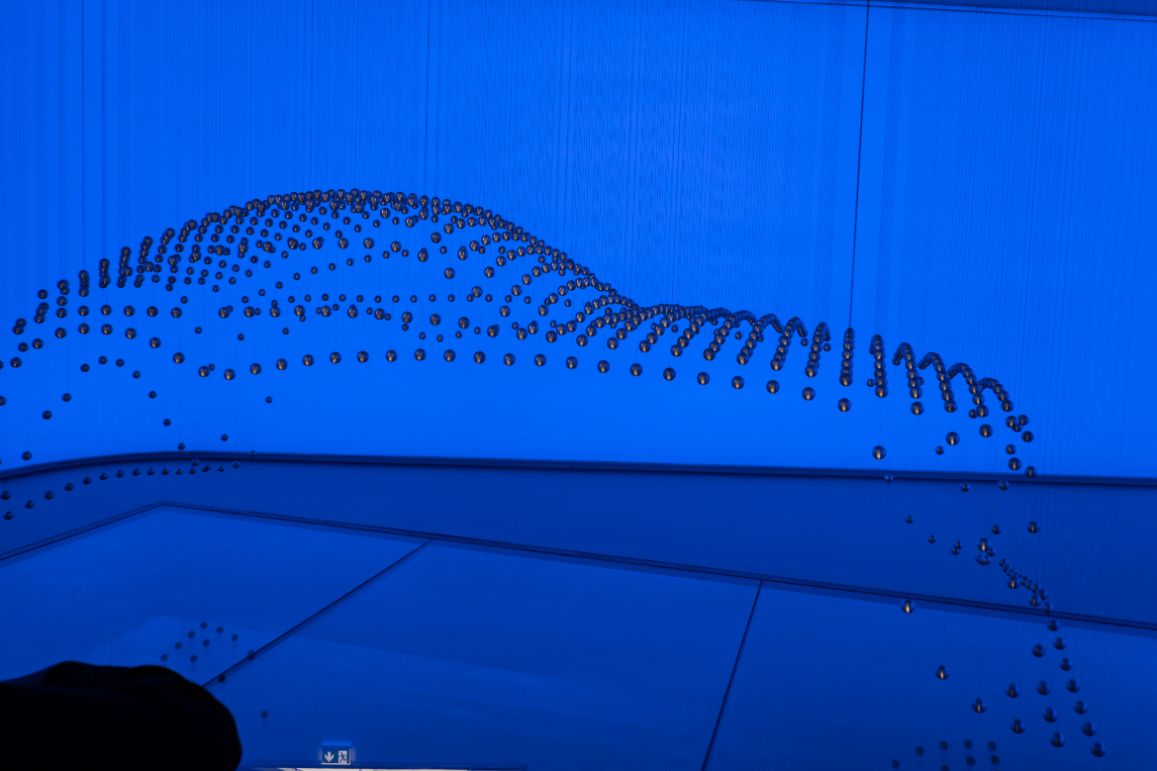
The first thing you’re greeted with is possibly the most relaxing art installation. Hundreds of tiny silver balls on string moved up and down, creating waves of patterns before briefly coming together to form the top of a car, then off it went again with some very calming music to accompany it. It was utterly mesmerising and it took actual willpower to stop fucking drooling and to pull ourselves away in order learn everything we would ever want to know about Bayerische Motoren Werke.
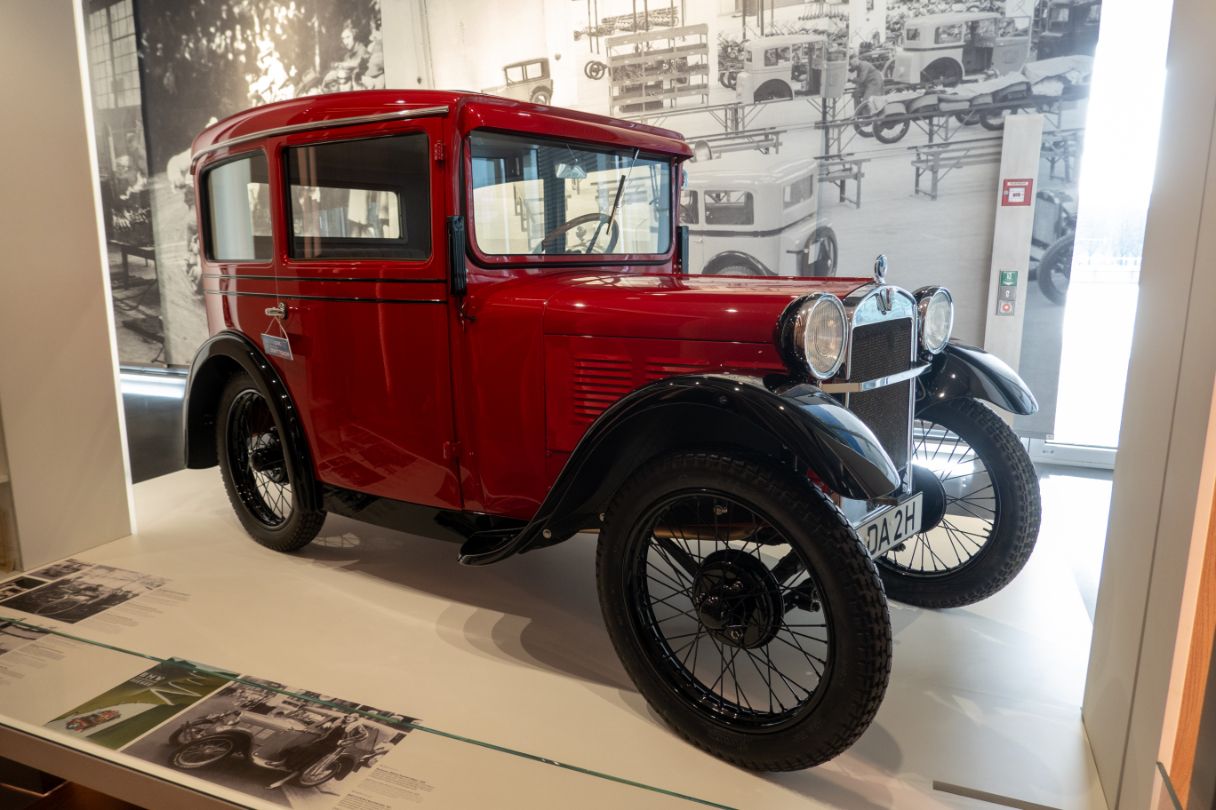
They started life building engines for aeroplanes and they were very good at it, thank you very much. Then after WWI the treaty of Versailles made it so Germany wasn’t allowed to build aeroplane engines anymore but it didn’t say anything about marine or truck engines so they started doing that. Then in 1929 they made the BMW3/15 PS, their first mass-produced vehicle, and the rest, as they say, is history.
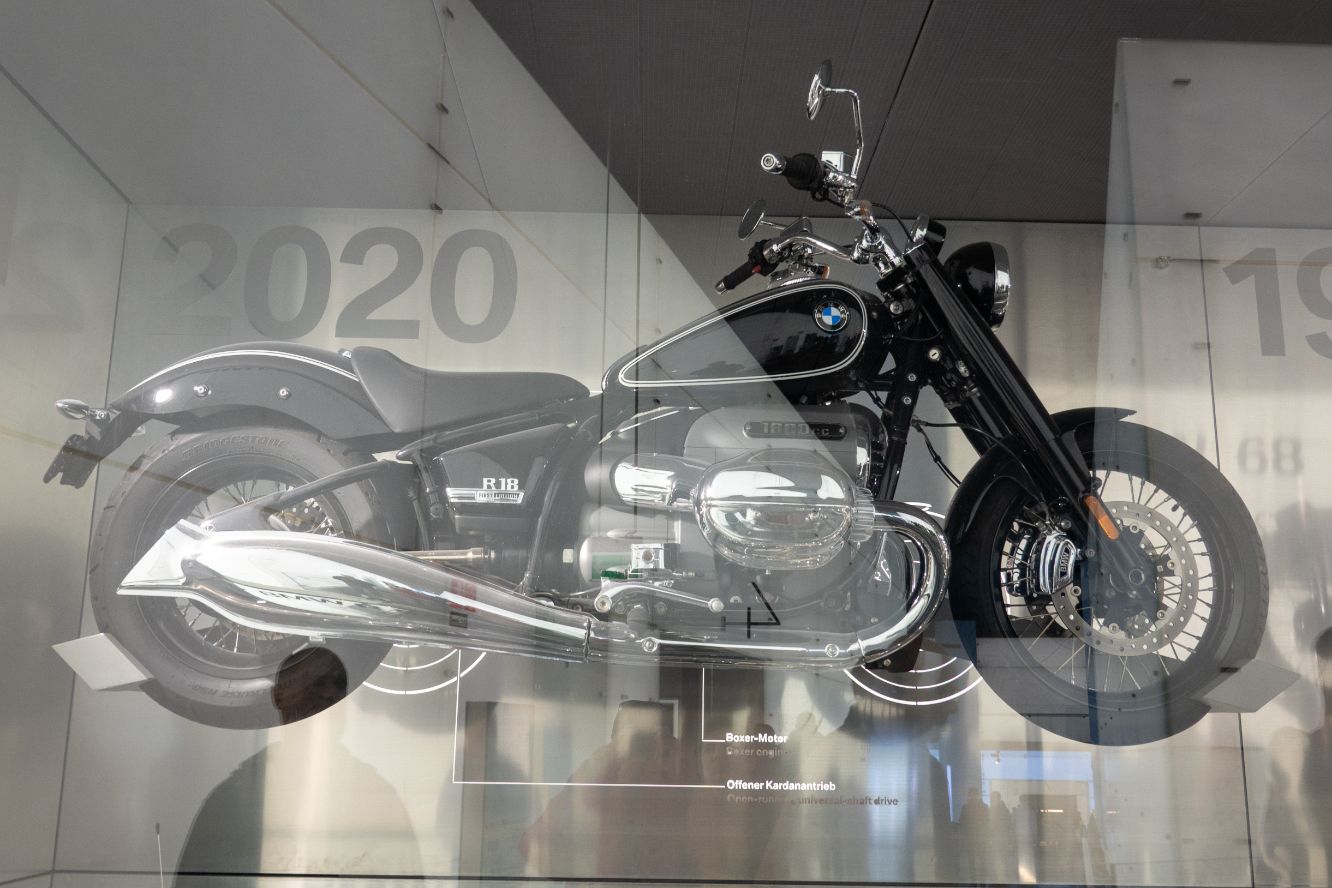
We strolled from room to numbered room, reading about engines and roadsters and motorcycles, oh my. I fell a little bit in love with a 2020 motorcycle, an R18, but I don’t have the bollocks to ride these days. I enjoy having my skin and brains where they’re currently located. There are far too many batshit drivers on the road these days hellbent on travelling as close as humanly possible to the vehicle in front and generally ignoring things like right of way or general road manners, especially in West Yorkshire where we currently live.
Anyway. One room which was particularly interesting was the room where they detailed BMW’s part in using forced labour during WWII. They acknowledge that, yes, it happened, that it was an outstandingly shitty thing to do and they’re not proud of it. Nor would they shy away from the fact they did it. During the war as more and more men were conscripted into the army, German industry as a whole was struggling for employees. They started recruiting from overseas, usually from occupied nations, and the staff, the so called Western Workers, were given similar rights and pay as the German workers. People from Poland and the USSR, as well as prisoners of war, the Eastern Workers, were brought in as forced labour and had fuck all rights. Food and accommodation were questionable and even minor infractions were severely punished with everything up to and including executions.
From 1942, BMW started using concentration camp prisoners and the principle of “destruction through work” was implemented. Foreign and German workers were differentiated by badges they wore. You could tell the concentration camp workers by their striped clothing. Thousands died due to working conditions, poor nutrition and basically fuck all hygiene. It made for some hard reading. I don’t know if you can ever really make up for it but BMW have attempted reparations. They’re a founding member of the EVZ Foundation which seeks to provide financial compensation to forced labourers and other survivors of atrocities committed by the Nazis.
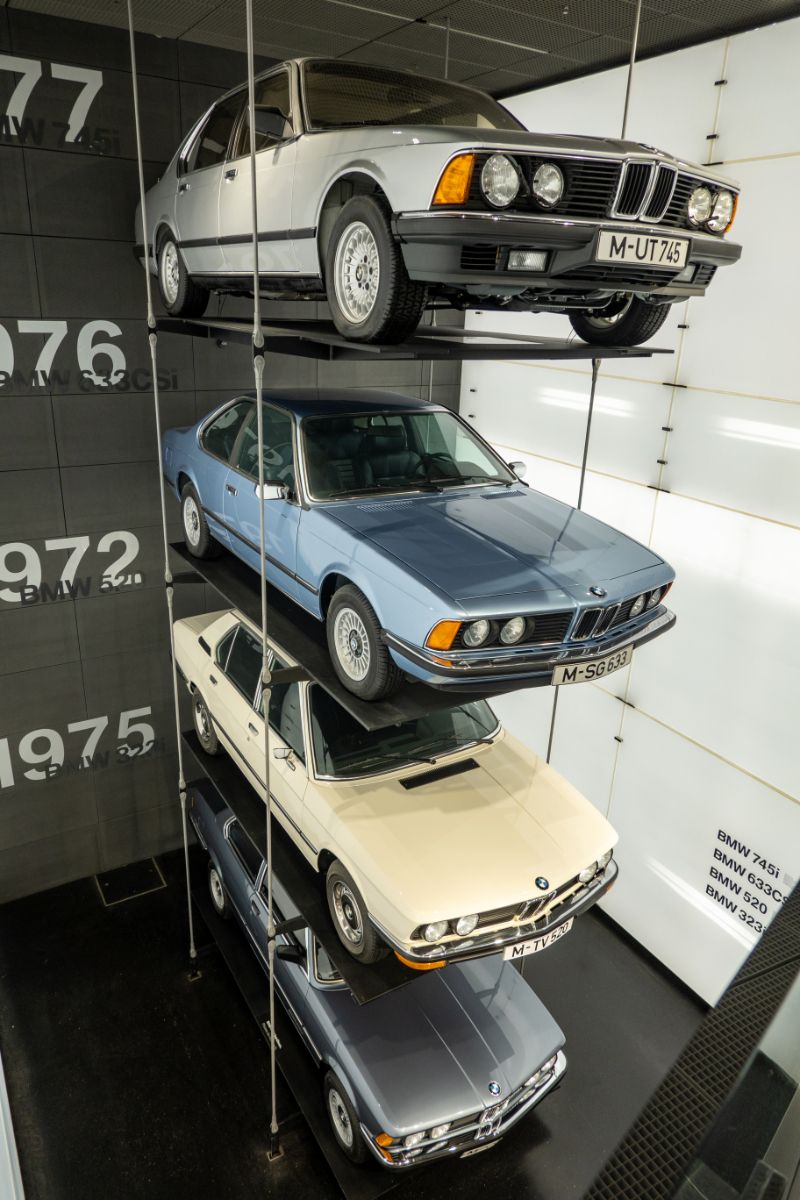
So yeah. I would absolutely recommend this museum even if you give exactly zero fucks about attractively shaped chunks of metal with an engine. If their cars are as well put together as their museum then yes, I want one. Bit out of our price range though. For now we’ll have to make do with our 2013 Hyundai i20 with its peeling paint and tendency to break down in the most expensive way possible every three months.
The Other Tourist Shit
We did one of those free-but-not-really walking tours on the Monday which we usually like to do a bit sooner in a trip but this was the first day we’d have a chance. Our guide was an Englishman called Jax who had lived in Munich since 2016 and he was brilliant. The first thing we did was go and watch the Rathaus-Glockenspiel which is set high up in the Neues Rathaus. Every day at 11am and 12pm (and also at 5pm but only between March and October) you’re treated to a little display of mechanical figures set to music. The top display tells of the wedding of Duke Wilhelm V to Renata of Lorraine complete with a jousting match between a knight in blue and white for Bavaria, and one in red and white for Lorraine. I’ll not tell you who wins. There’ll be no spoilers in this blog for something that’s occurred twice a day for 117 years.
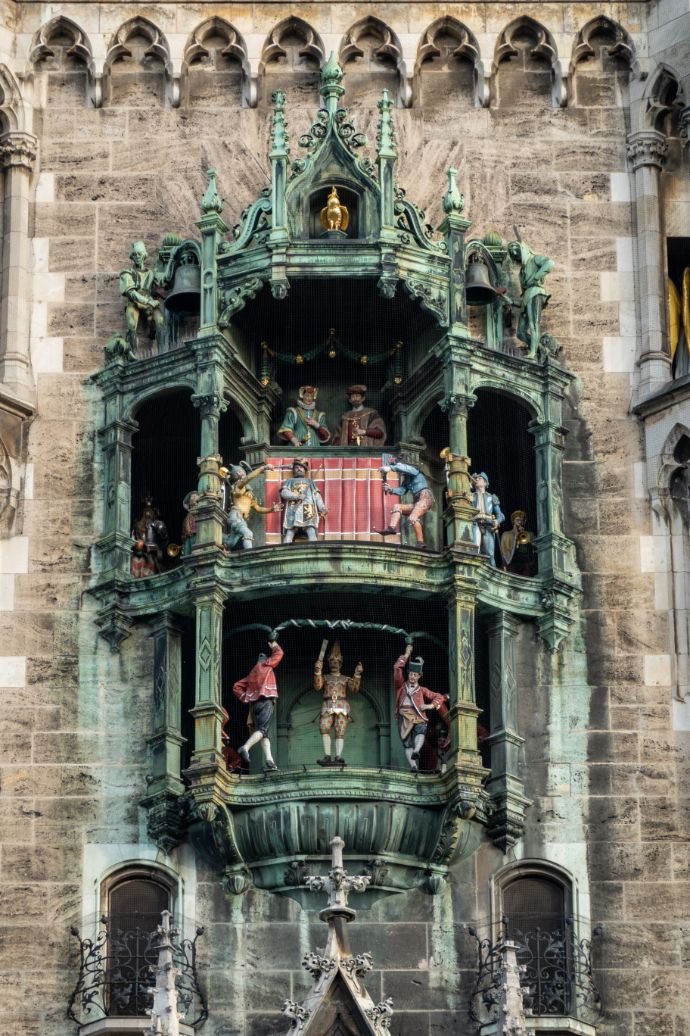
The bottom story tells of the coopers’ dance, whereby apparently after every plague the coopers (yeah, the blokes that make casks) danced through the streets to celebrate the end of lots and lots of deaths and to get people out into the streets. Kind of like the UK’s Eat Out To Help Out scheme after Covid-19 but with more frivolity and probably less people whinging about vaccines being a ploy by the state to put tracking devices in everyone. Like the government give a flying fuck what you’re up to, Kevin. Anyway, the dance is still performed in Munich every seven years regardless of whether there’s been any manner of plague. The last one was in 2019 so we’re looking at 2026 for the next one if you fancied watching men in white socks frolicking through the streets. Imagine wanting to be a cooper when you grew up but having to learn to fucking dance as well as make barrels. Like barrel making isn’t hard enough without adding cardio.
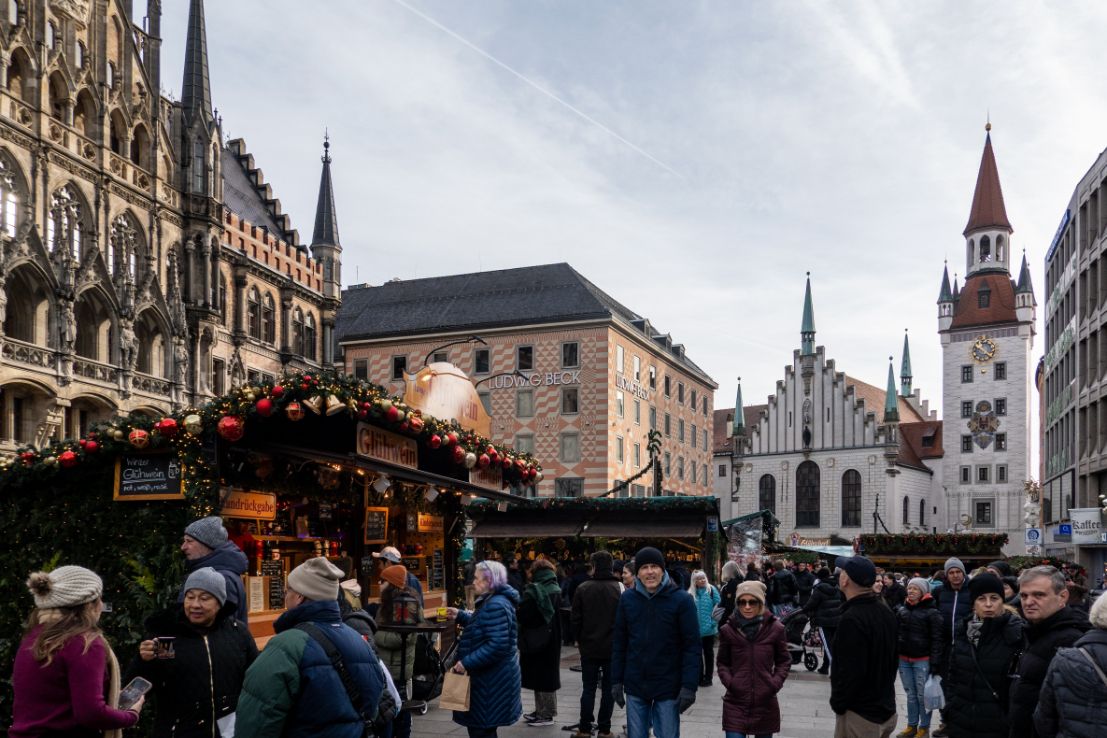
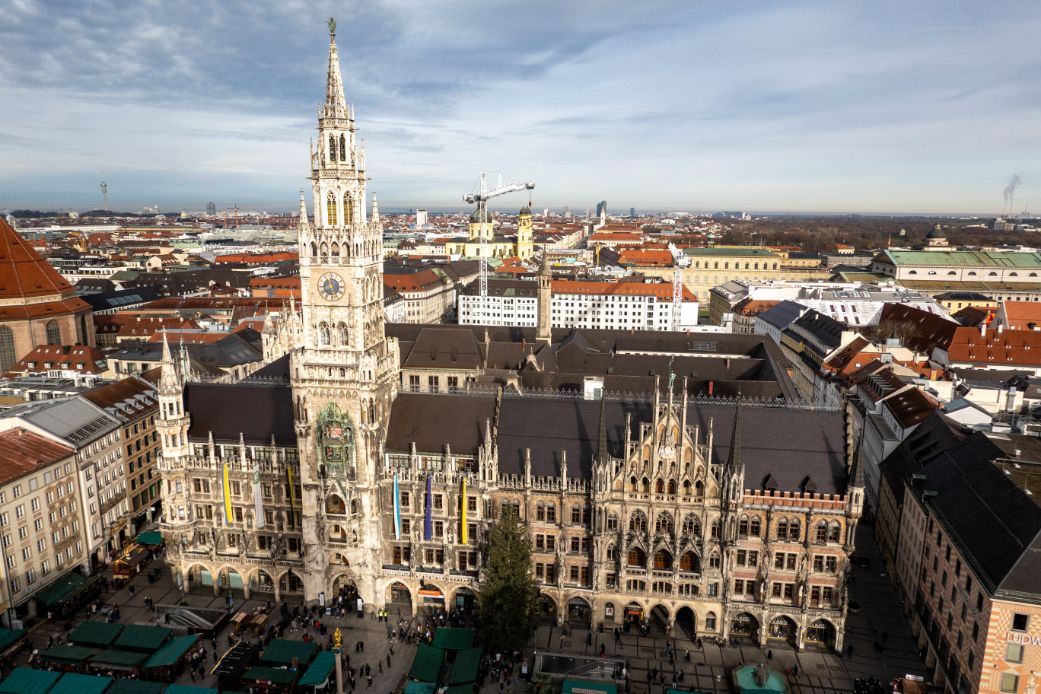
Jax took us inside the Neues Rathaus and pointed out various depictions of monks. They are, apparently, everywhere all over the city. The name “München” comes from a word meaning “home of the monks”, because there was a Benedictine monastery here before there was a city. Basically the city was founded because they wanted the salt trade to use the River Isar, it was just a trading post. But salt was worth batshit amounts of money in those days. I’m not entirely sure what the monks thought of it but I doubt they were invited to lodge a protest at any point. But that’s how the city got its name and once you know there are monks everywhere you can’t unsee them.
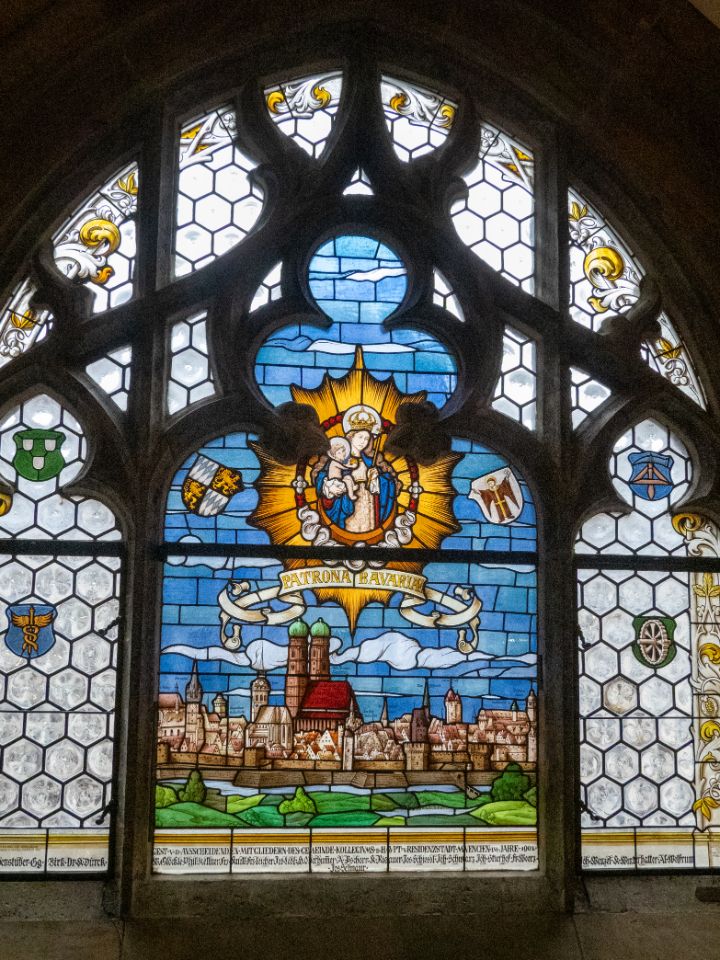
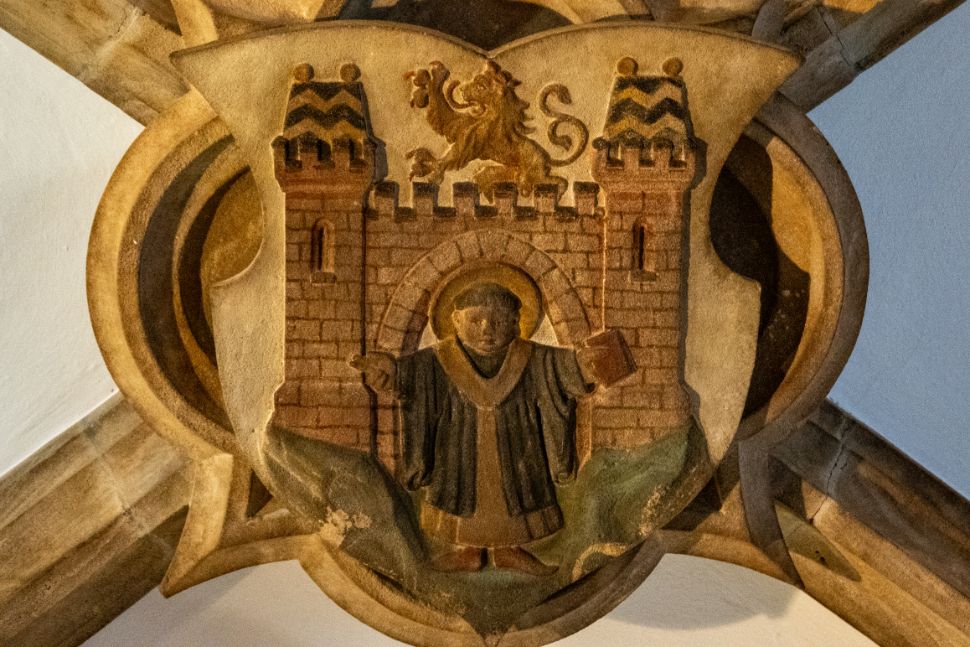
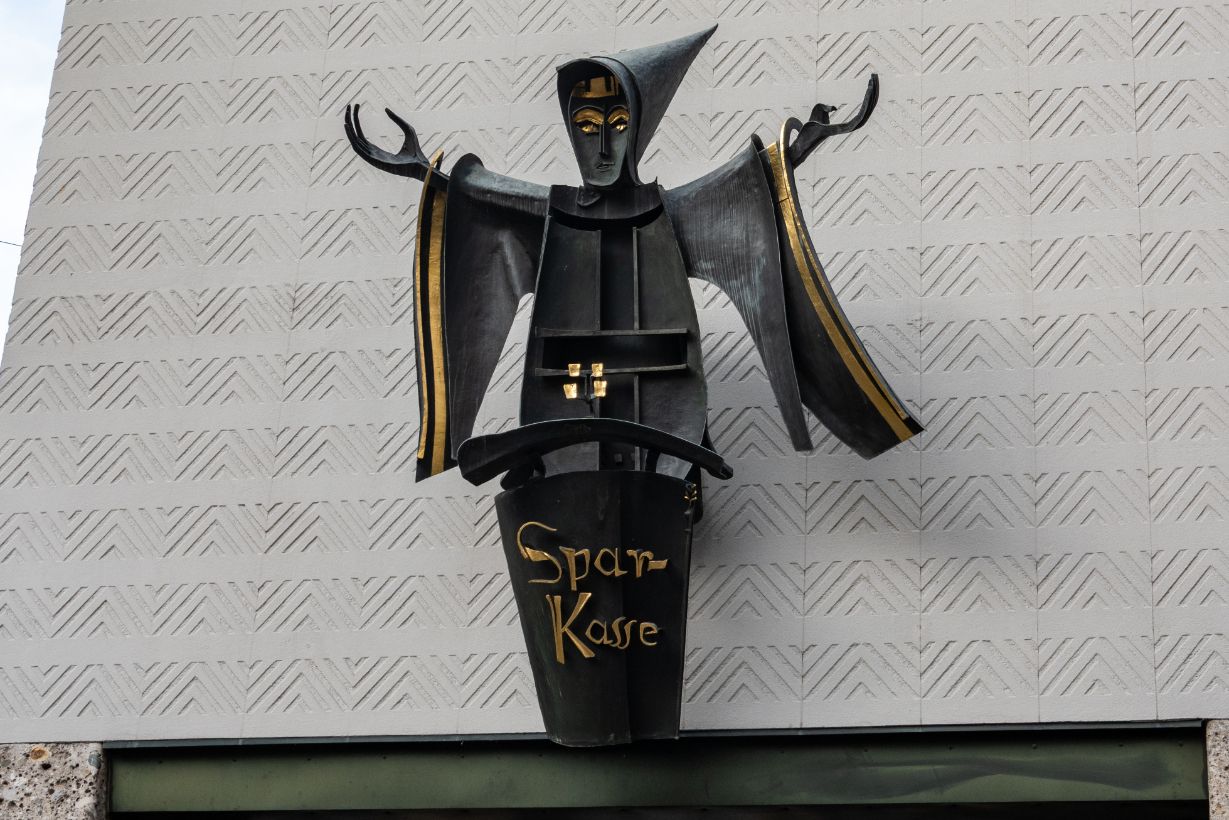
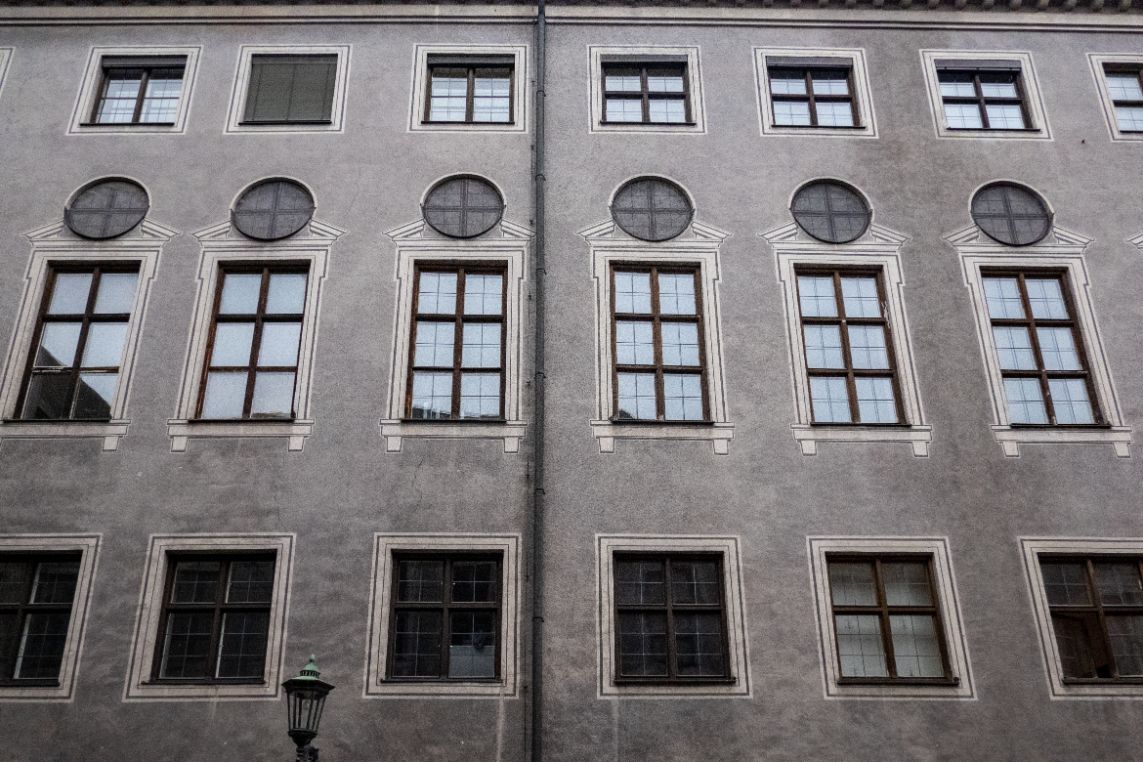
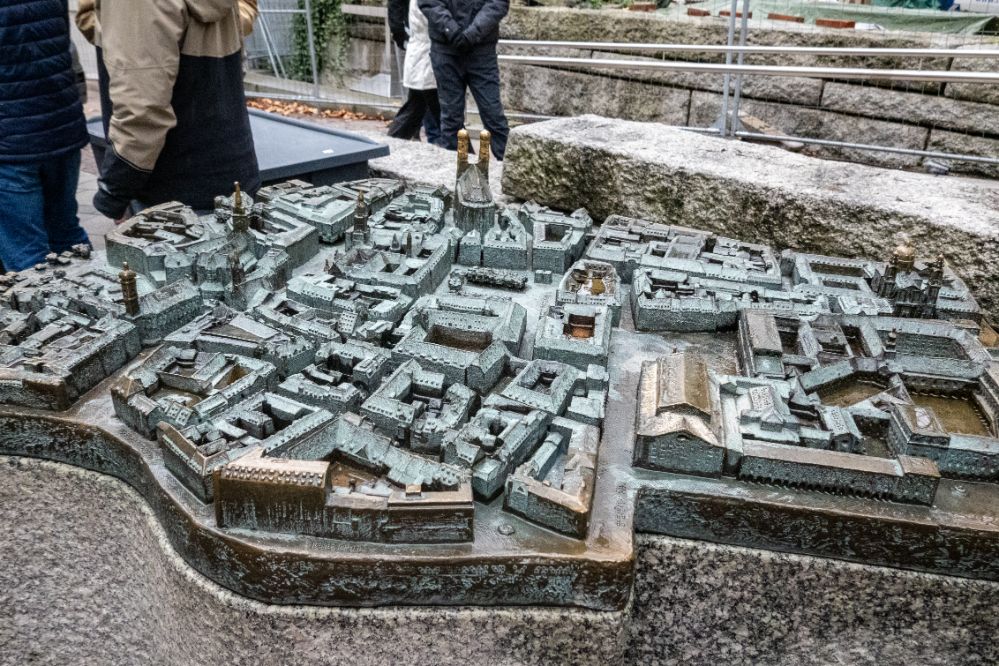
Talking of things you can’t unsee, we were wondering how Munich still had so many beautiful historic buildings when it took such a battering from the Allied forces during WWII. Turns out it has two (2) historic buildings; the Neues Rathaus and the Frauenkirche which is the cathedral. Everything else is built from leftover materials and concrete and the bricks are fucking painted on. I’m not even shitting you. I probably wouldn’t have noticed if it wasn’t pointed out to me, until we got to the Residenz.
It’s a former residence of dukes and kings, and it’s now a museum. We didn’t go inside but we were led around the outside and the details are glaringly two-dimensional. A lot of window holes have windows but some of them are just blank spaces. Turns out rebuilding a city from scratch in the original style costs a fair whack of dollar and this was the most affordable way of doing it. You feel like you’re on some manner of movie set and everything is made out of plywood.
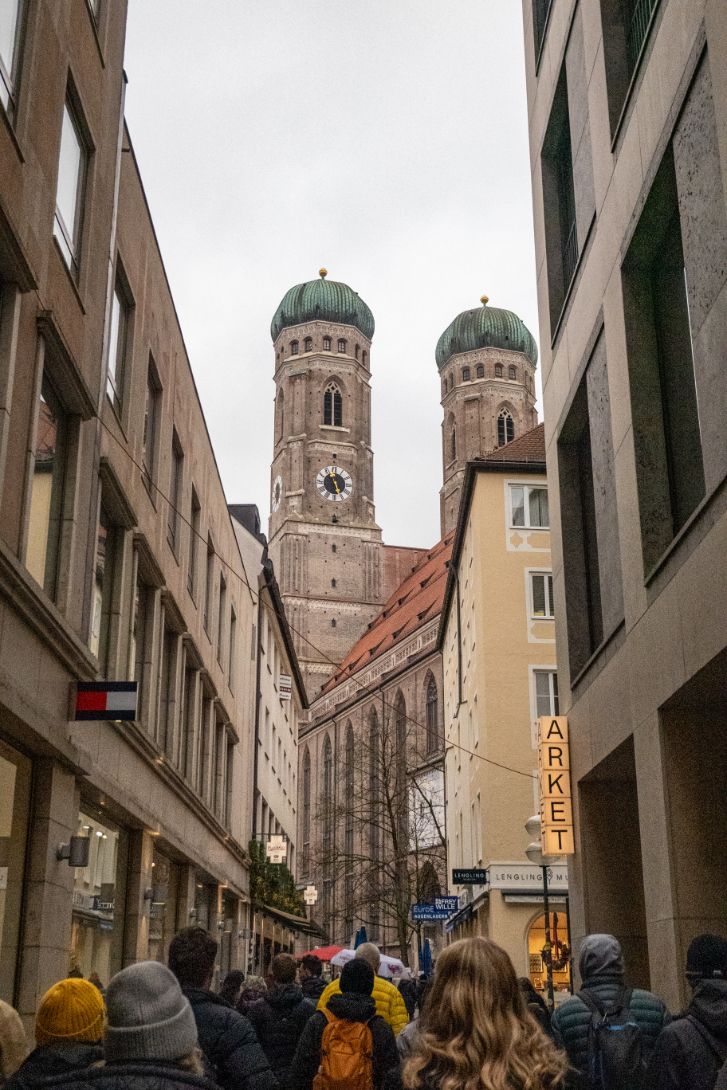
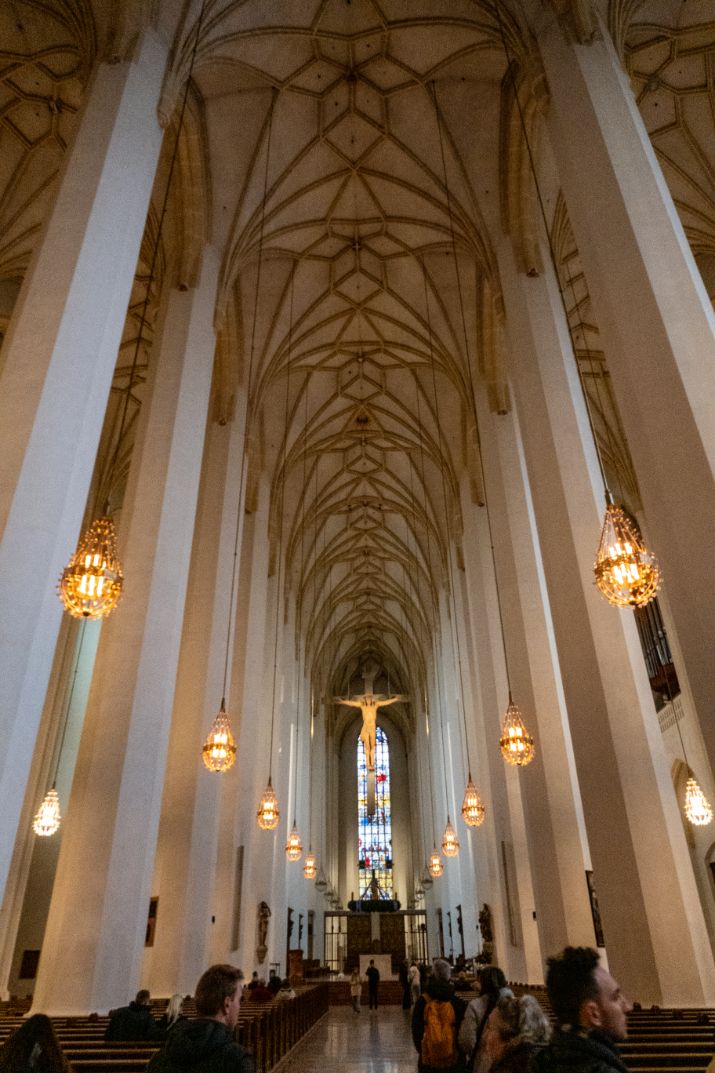
Jax told us the town hall (Rathaus) and the cathedral, the Frauenkirche, survived as pilots needed landmarks to know where to drop the bombs so the most distinctive buildings were deliberately missed. The cathedral is the tallest building in Munich by far (and will remain so forever on account of building height restrictions in the city) but it did have its roof blown off and a lot of the inside was destroyed. You can tell the walls are original as they’re made of brick. If you see a brick building in Munich it’s likely to be original.
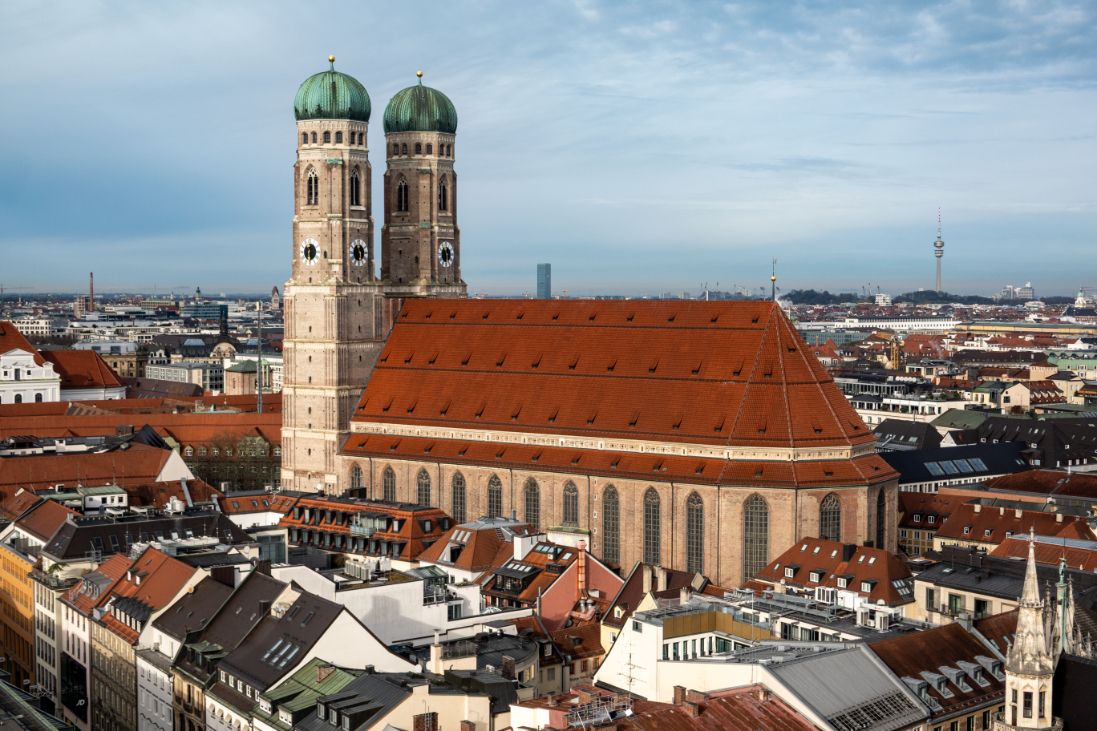
They did restore the interior but many artifacts were lost either due to the bombing or, I don’t know, looting probably. You know what people are like when they see an opportunity. These days it’s TV and trainers. Back then people were probably pushing shopping trollies full of Virgin Marys home. Nothing like being silently judged from the mantlepiece by the fruits of your frenzied theiving.
We didn’t stay long at the Feldherrnhalle, it was covered for cleaning when we were there, but apparently it’s a replica of the Loggia Dei Lanzi in Florence. It’s also where Hitler’s attempted coup, the Beer Hall Putsch, was foiled during a shootout where 15 members of the Nazi party were killed. Obviously Hitler wasn’t one of them despite being on the front line. After being in prison for a while for treason, he decided to get to power with more legal albeit morally questionable routes and I’m pretty sure everyone knows how that ended.
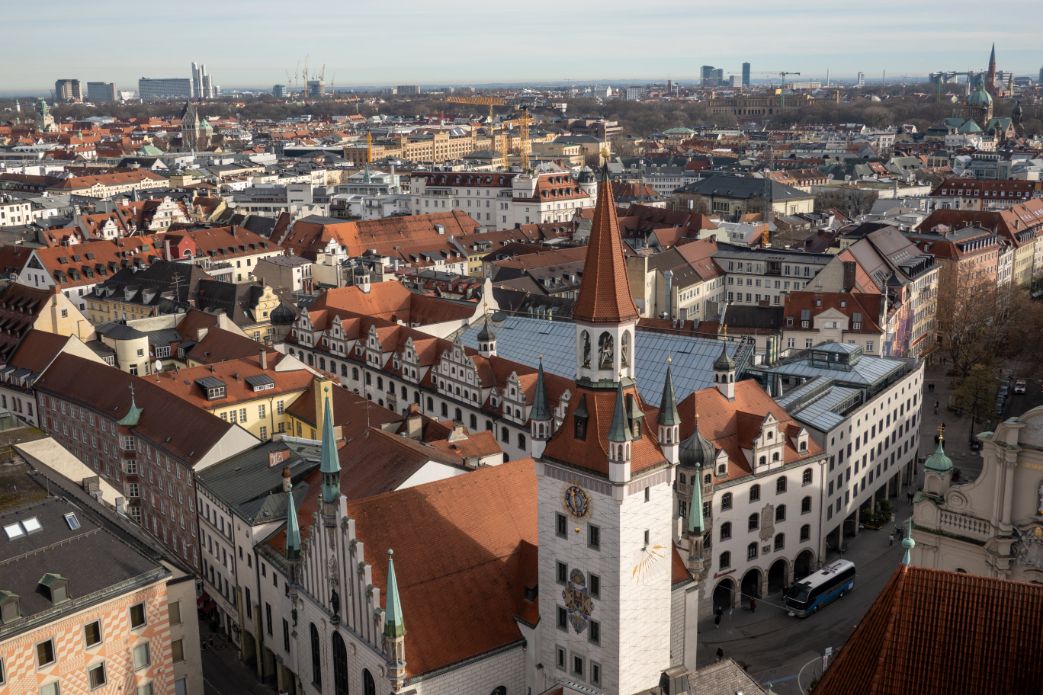
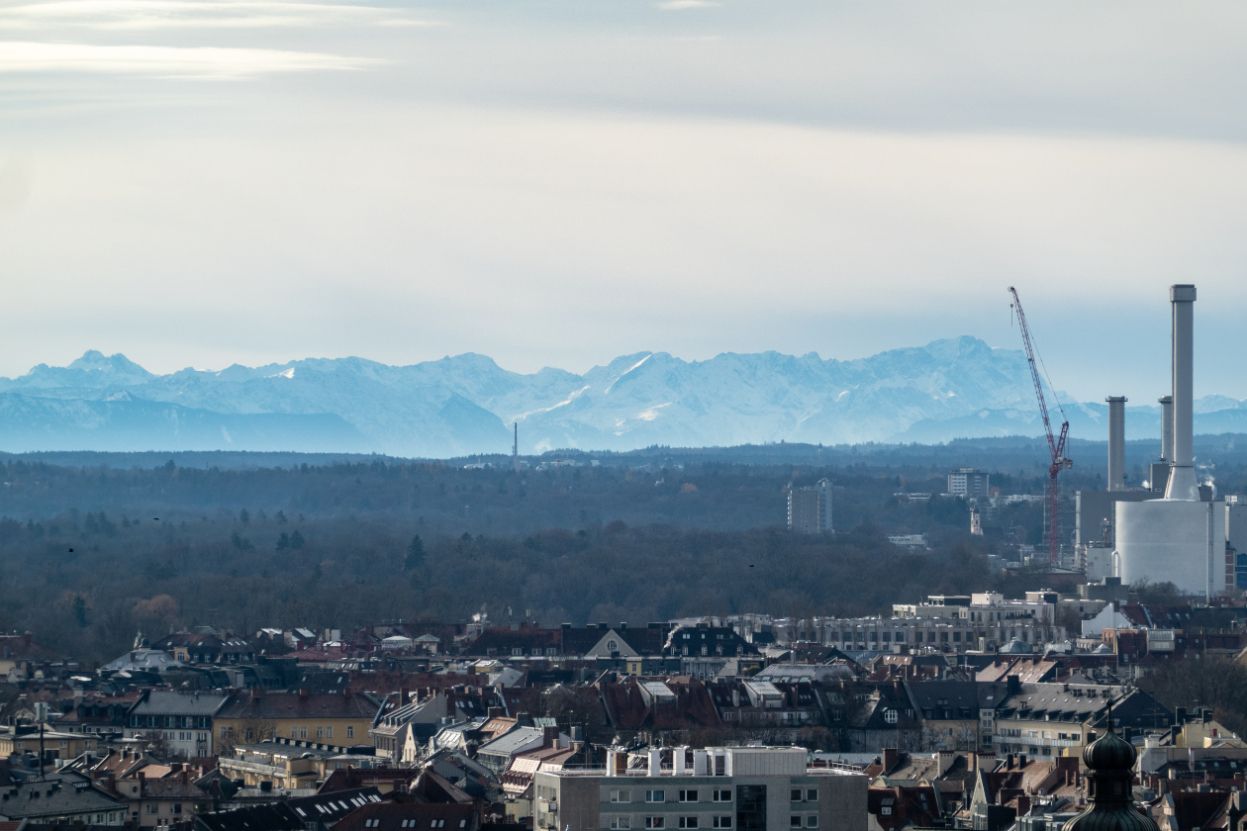
One thing we did outside of this tour is something I would absolutely recommend. St Peter’s Church has a tower, Alter Peter, which you can go up for a small entrance fee. You’ve got to be able to tackle about 300 steps without dying but once you’re up there the views are spectacular. On a clear day you can see all the way to the Bavarian alps, and you get an unrivalled view of the Rathaus and the cathedral. The Rathaus does have a tower you can go up too but then you wouldn’t be able to appreciate the building in all its neo-gothic glory. Once you’ve climbed up the 300 steps you’ve got to get back down them and your knees will have opinions on this, but it really is worth the lactic acid.
There are, obviously, a metric fuck tonne more things to see and do in Munich but we spent a lot of time at Christmas markets instead. We’ll have to come back and not only because I didn’t get to eat all the food I wanted to eat. This is always a problem with city breaks. Too much food, too little time.
Jump to “Useful shit to know…”
 München, Bayern, Deutschland
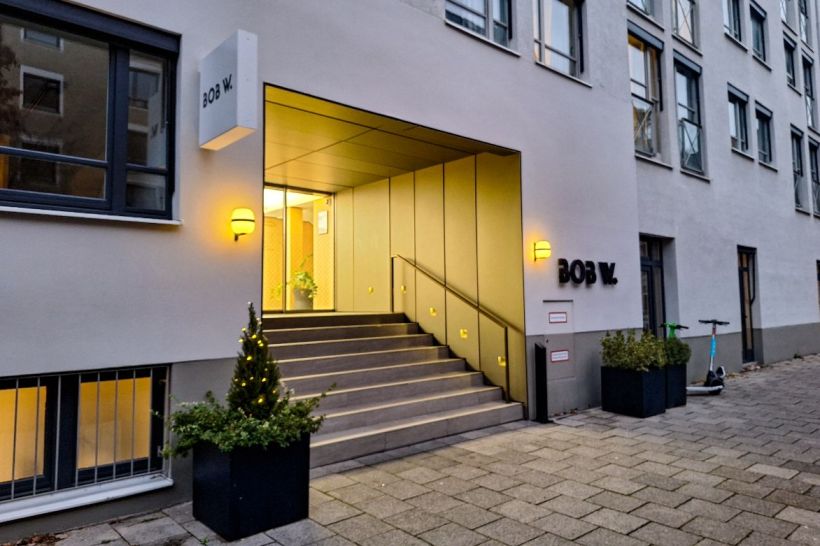
Stayed at: Bob W. Munich Schwabing, Munich
Useful shit to know…
- The BMW Museum cost €16 each. We bought our tickets online before we left. When you arrive there are huge QR codes everywhere inviting you to do the same.
- I believe you can buy tickets on the door but online skips any queues.
- The closest U-Bahn is Olympiazentrum.
- We booked our walking tour through GuruWalk. We used Heart of Munich.
- It’s pay as you feel. We thought it was brilliant and so paid €25 each. Others paid around €15 or €20.
- Alter Peter cost €5 each to go up and it was worth it. It really is about 300 steps though so bear that in mind.
Getting Around
- There are no barriers for the S-Bahn and U-Bahn in Munich. They just trust that you’re going to buy a ticket.
- If you buy a paper ticket I think you have to validate it at the machines on the way in.
- We used the MVV app. If there are two or more of you and you plan to get a few trains that day it’s worth getting the group day ticket. It’s good for up to five adults over 15.
- The tickets you buy on the app are good for trains, buses and trams.
- The MVV app is great, you can use Google Pay (I’m assuming Apple Pay too) so you don’t have to dick around putting a card in.
- Everything in the city including BMW Welt & Museum are in zone M. The airport is zone 5.
- If you’re heading into the city from the airport and intend to get more trains you can get an Airport-City_Day-Ticket. If you’re going from the airport to the city and staying there (or vice versa) you can just get a single ticket, zones M-5.
- You can use Google Maps to find out which U-Bahn or S-Bahn goes where, and it covers buses and trams too.

 Travel & Shit
One thought on “Munich, Germany – General Tourist Stuff”