You sort of get used to volcanos looming over towns and cities in Central America, you start to expect it. If a fuck off big cone doesn’t adorn the skyline you wonder what’s missing. I’m still not bored of murder mountains though and I’m not sure I ever will be but I don’t feel the need to clamber up every single one of the buggers. We select our volcanos carefully for an acceptable discomfort to wow factor ratio. Might have fucked up slightly when we decided to climb up and subsequently camp on Volcán Telica in the Rainy Season but that was quite a spectacular crater so it was worth the unpleasant sweating and the gasping for breath as I turned a fetching shade of red.
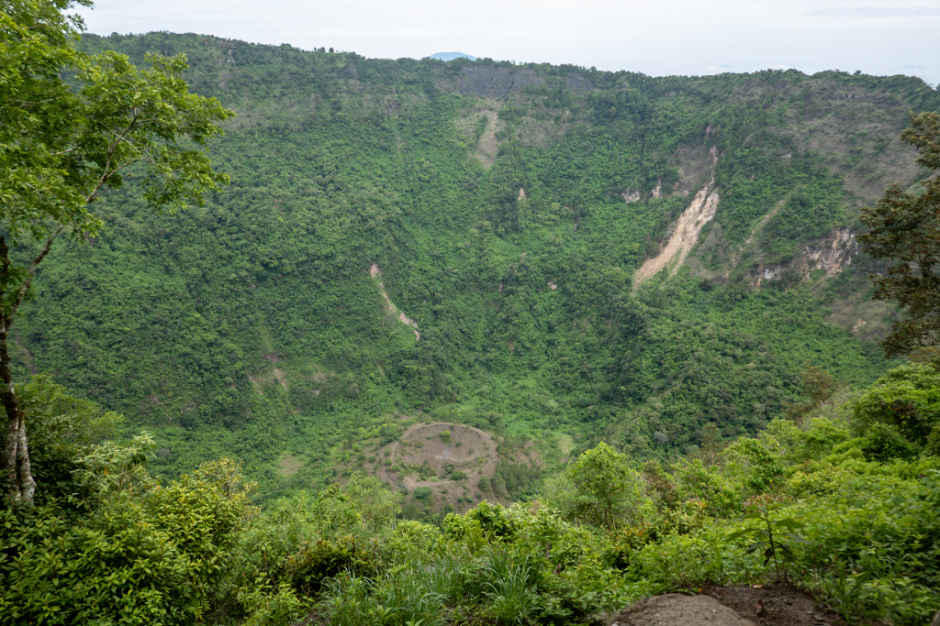
Volcán San Salvador is good because you can get a bus to do most of the work for you and all you need to do is drag your unwilling carcass up a small hill to the crater rim as every cell in your calf muscles scream, “I THOUGHT WE WEREN’T DOING THIS ANYMORE!!” as they slowly drown in lactic acid. Sorry, legs. We’ll do some more hammock slobbing very soon. You can Uber there rather than taking two buses but where’s the fun in that? Local buses are part of the adventure for me. Tarrant would very strongly disagree but the urban buses here do fill up to bursting and if we’re sat down she often has to deal with a crotch or two right by her head.
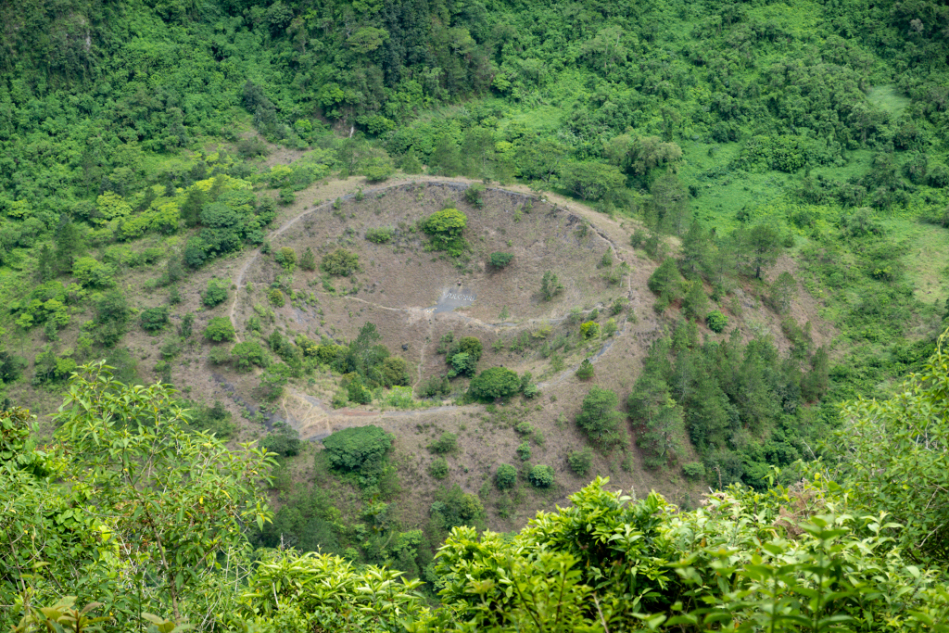
Anyway. The volcano, also known as Boquerón, last erupted in 1917 and this formed a tiny volcano within the crater and this is what I wanted to put in my eyeholes, because how cute would a little baby volcano be? It’s called Boqueroncito which is just even more adorable. It was indeed absolutely very cute but then yeah, that’s pretty much it. There are a couple of miradores you can check out for marginally different views but that’s your lot. The effort to joy ratio still stands though. The crater is cool but it’s not “walk up a hill for five hours in the Tropical heat” cool, but then the walk up was something even I could do without my heart trying to shatter my rib cage and make a break for freedom.
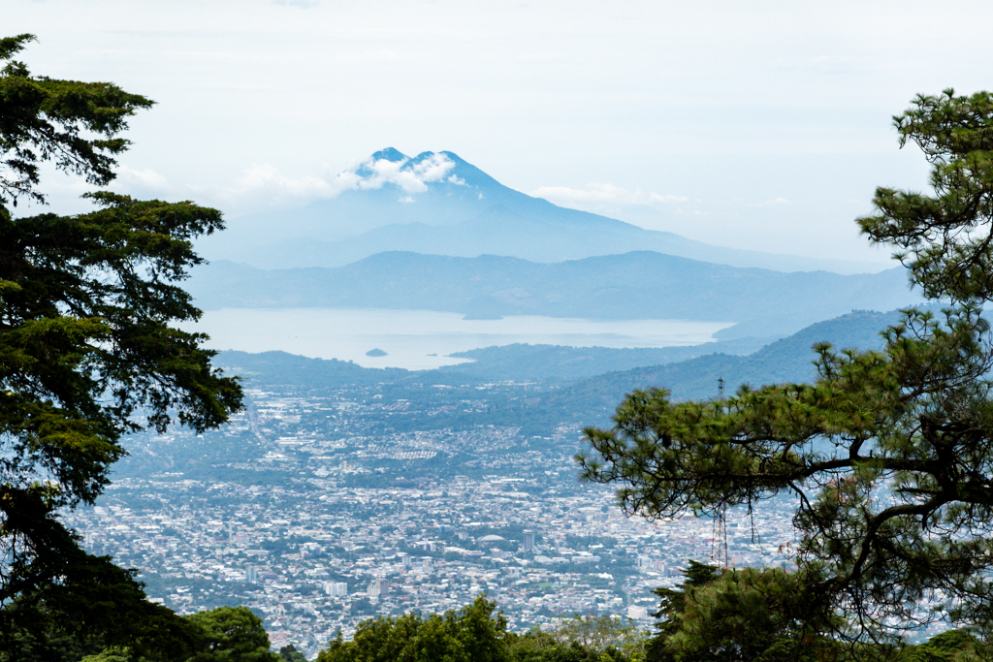
You used to be able to walk around the whole crater rim (Rim. Hehe) but there’s a sign up telling you this route is closed. Mates of ours, Lana and Mike, had a go anyway and it did not go well. If you’re a fan of scaling high fences and fending off angry dogs with a stick then absolutely go for it but yeah nah, that would skew the effort : joy ratio in the wrong direction. We went and found a coffee with a nice view of a distant lake and Volcán de San Vicente. Much more civilised.
The next day we thought we’d go and put some history in our eyeholes. We’d gotten properly ruined out in Egypt, especially as we’d gone straight there from Greece, but enough time had elapsed and we were ready to see some more broken shit. This broken shit isn’t as old, Joya De Cerén was a village built atop the ash layers of a previous volcanic eruption, Ilopango, and existed for 150 years before the Loma Caldera erupted and completely covered it in ash in 650AD. It’s casually referred to as the Pompeii of Central America but there were no bodies as they’d been alerted to the potential for the volcano to go apeshit by seismic activity and noped out of there. The rest of the village, however, is insanely well preserved.
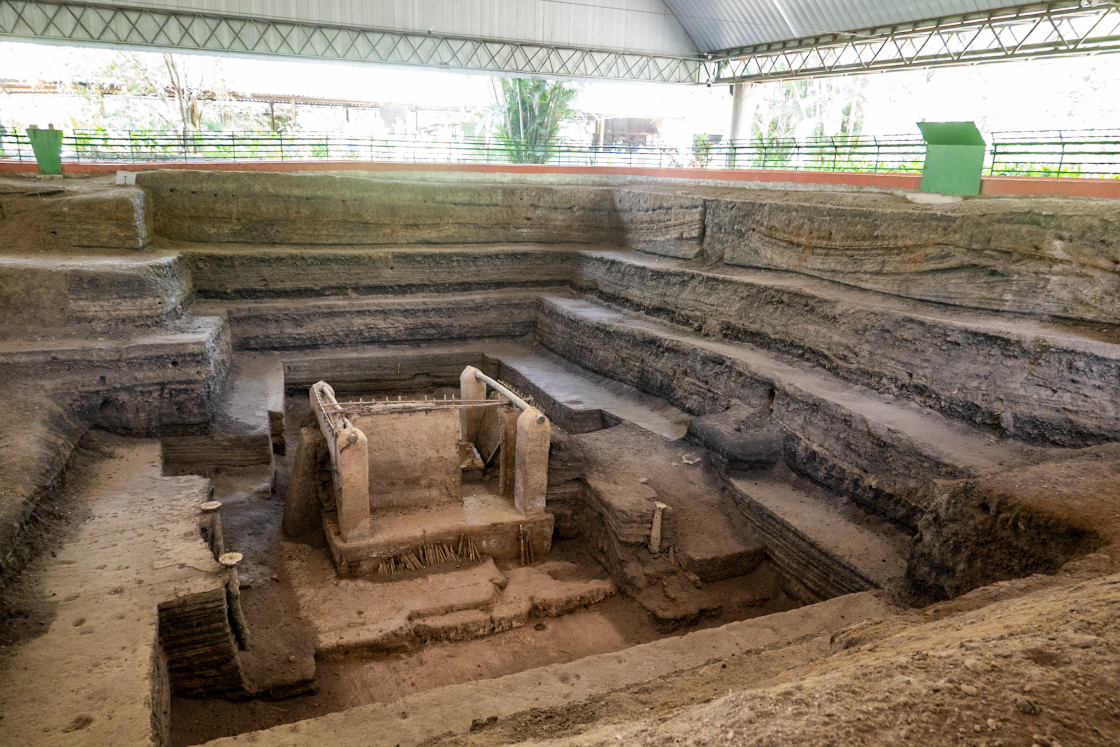
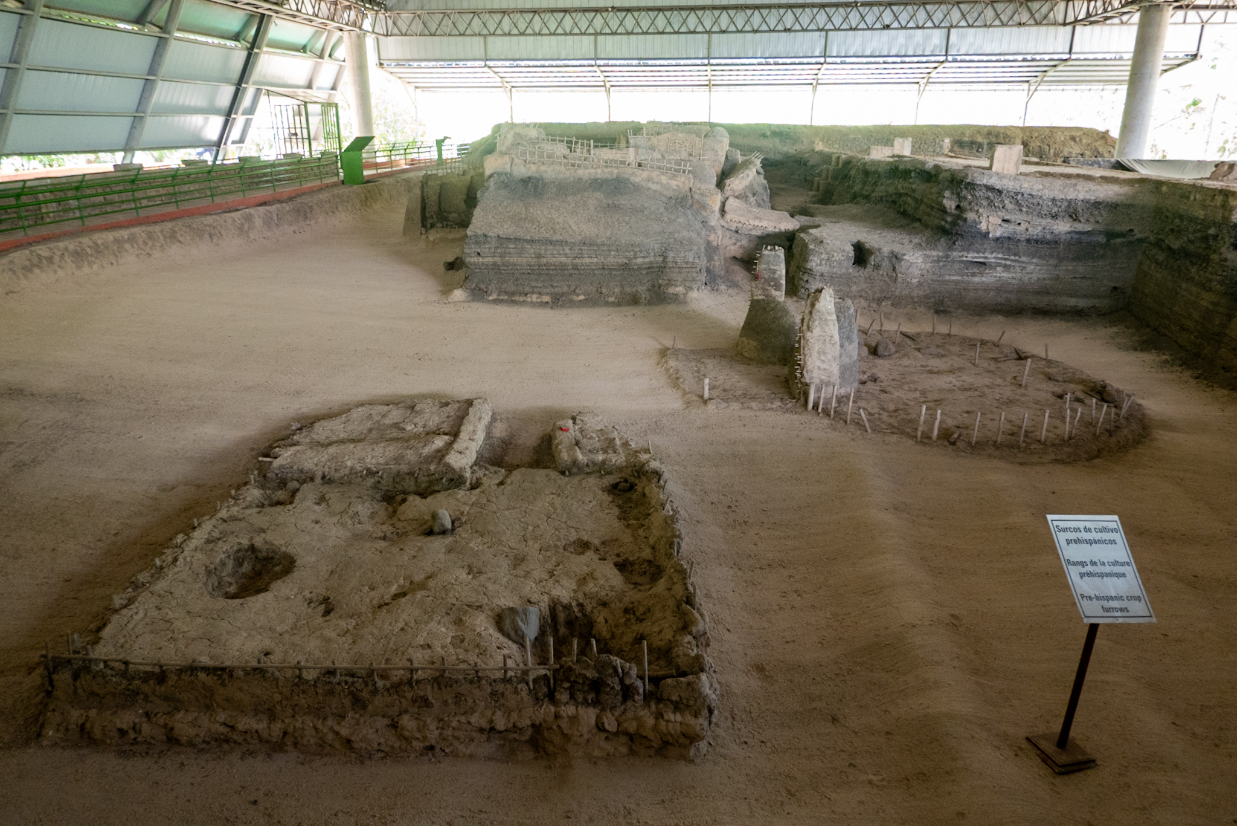
That’s what has earned it the UNESCO status, the unique insight to the everyday lives of everyday people. Huge stone temples and pyramids leave ruins visible for centuries, if not millenia, we know all about the lives of kings and gods, but Dave up the road? His house was made out of sticks held together with wattle and daub and that shit rots to nothing. Unless it’s covered in fourteen layers of volcanic ash, which Joya De Cerén was.
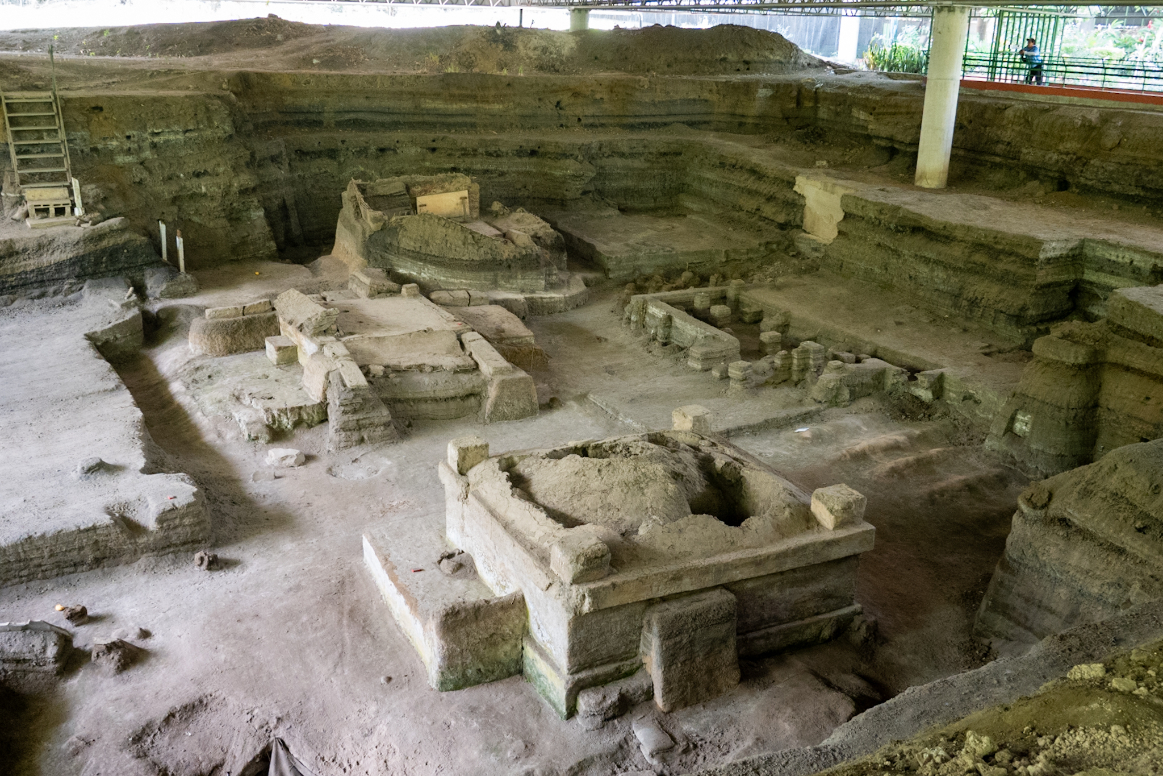
It’s one of those things that you need to understand the context for it to mean anything to you or you’re just looking at some broken mud walls. The families lived in clusters of buildings rather than having all their shit under one roof which would be an absolute ballache of it was pissing rain and you needed to go from the residence to the kitchen to pop the dinner on. They even had a sauna, called a temazcal, like a domed building you have to crawl into. They built a replica outside and quite frankly no saunas for you if you were in any way nervous about hot, dark enclosed spaces. There was a box of hot stones in the middle that were doused with water and herbs. It was meant to be cleansing. It sounds like claustrophobia waiting to happen.
One of the buildings has lattice work windows, they think this was where the shaman worked and they think the shaman was a woman on account of the presence of spindle whorls which, in Mayan culture, were exclusively used by women. They found other shit which makes them believe this was the shaman’s house including a deer mask used in ceremonies. It’s so fucking cool how they can piece together the lives of these people just by what they left behind.
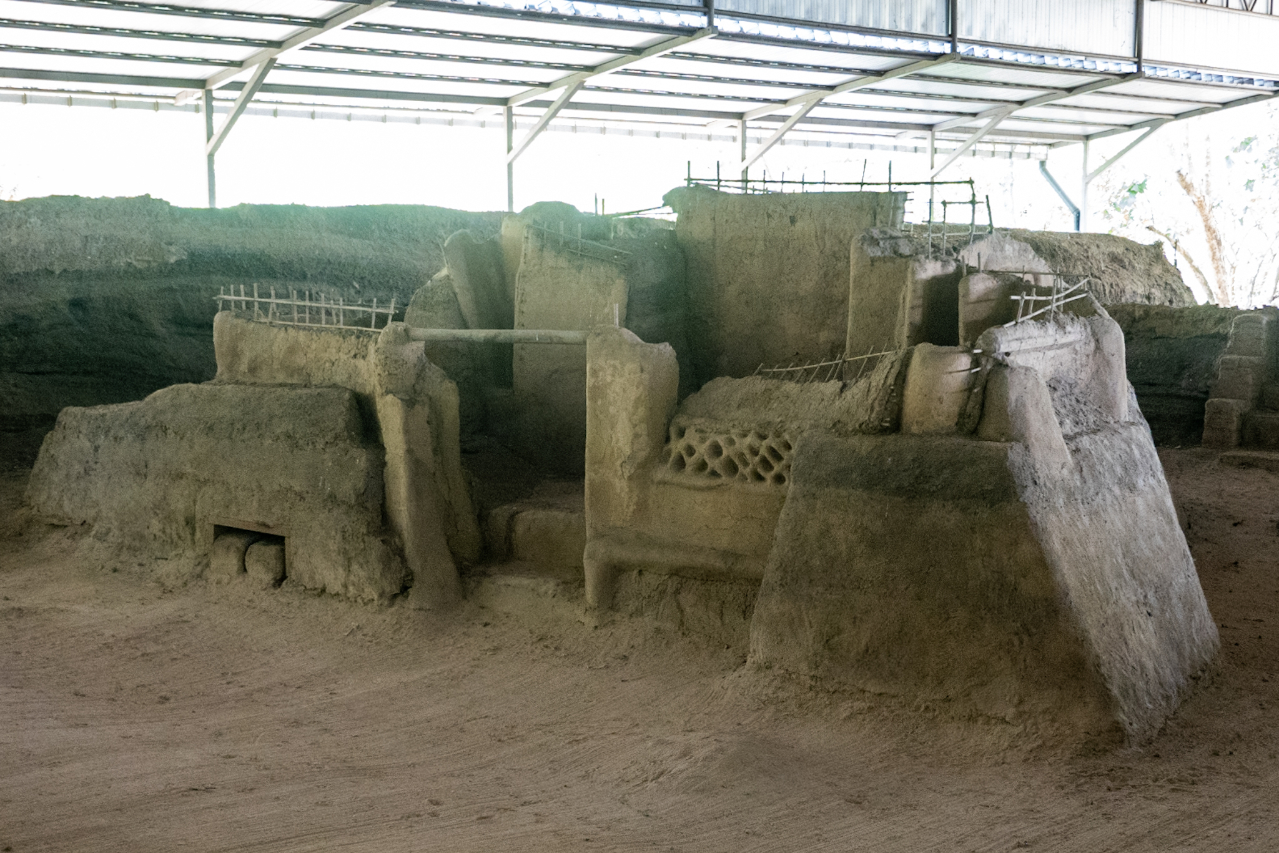
One dwelling belonged to a family of farmers. They found tools, seeds, and a basket used to store ears of corn. There was evidence that agave was processed here to be used for rope. I’d be interested to know when someone realised you could also turn that shit into the vomit juice that is tequila. Another was a family of artisans. They found a tool used to smooth pottery, a lump of clay, several pieces of pottery made from the same type of clay block. The kitchen was a round building with wooden lattice walls to allow for ventilation.
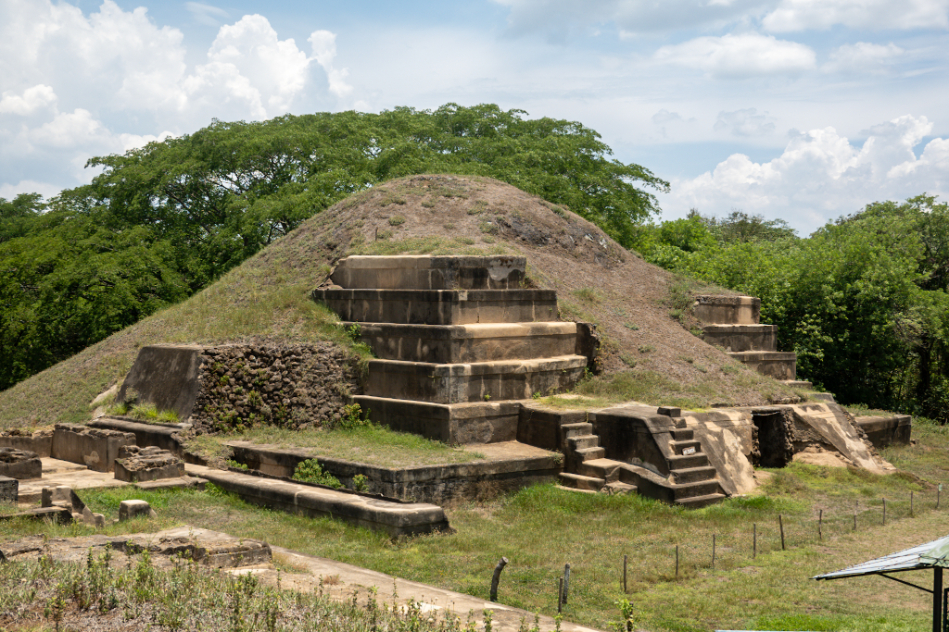
Anyway, once we’d put all of that in our eyeholes we took two buses to the Ruinas De San Andrés, which you might as well do if you’re in the area, to gawp at our first Mayan pyramid. I think if you’ve already had the pleasure of wrapping your eyeballs around a Mayan pyramid then you don’t really need to go here. There’s not a huge amount of information on it and I have more questions than when I arrived here but it’s a very cool, very relevant piece of history. San Andrés was the main administrative centre in the Zapotitán Valley.
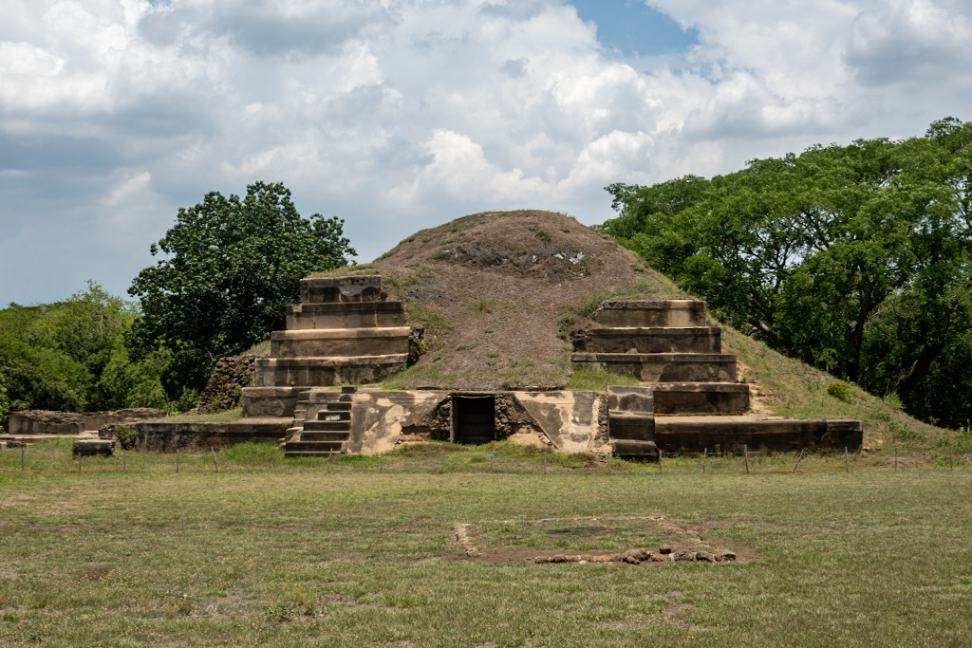
Apparently one of the structures used to be a plaza until they decided they wanted an acropolis and used 500,000 adobe bricks to raise a platform that was off limits to the common folks thus proving that rich people have always been land grabbing fucknuggets. The tallest structure was thirteen metres high and consisted of eleven terraces. I still have exactly zero clue what it was used for or if it was hollow or what. Hopefully as we visit bigger, more popular ruins we’ll learn a bit more about this shit because right now I’m just standing on hills taking photos muttering, “Cool pyramid, bro.”
That was us all historied out for the day. We headed back into San Salvador on the first bus that deigned to stop for us and went to sit in the air conditioning for a while. We do like to treat ourselves to a room with a spot of iced air every now and then. This room also comes with a hot shower, a novelty we’ve not enjoyed since Granada. The first thing we did when we arrived was wash our clothes in it but I think most of our garments are beyond saving now after nine months of wearing the same three things on repeat. I am grubby. Everything I own is grubby. I am Queen Grub of Grubland. I’m not even a little bit sorry.
Jump to “Useful shit to know…”
 Around San Salvador, San Salvador, El Salvador
Stayed at: Hotel Happy House, San Salvador

Useful shit to know…
- To get to Parque El Boquerón from San Salvador you first need to take the 101B to Santa Tecla and change buses there.
- We were staying near the Metrocentro so we walked to Alameda Franklin Delano Roosevelt, opposite the Castillo Venturoso. Coordinates 13.700403, -89.213667.
- We caught the 101B at 8am on a Monday and traffic wasn’t too bad so it only took about 35 minutes. I’ve read accounts where it took over an hour.
- It cost 30c each and you pay the driver when you get on.
- We weren’t sure where to catch the 103 to Parque El Boquerón so we got down by El Cafetalón. We probably could have stayed on a little longer.
- After asking around we were directed to the corner of 3a Calle Oriente and 1a Avenida Norte.
- You stand on the latter. Coordinates 13.676627, -89.286805 should be fine.
- The 103 will have “El Volcán” or “Parque El Boquerón” written on the front.
- It cost 50c each and took about 40 minutes.
- You get off at the last stop, coordinates 13.731539, -89.274908, then walk the 800 metres up the hill to the park entrance.
- The park entrance was US$2 each.
- There’s not much to it, you get a few good views of the crater and the tiny volcano within.
- There used to be a whole crater rim walk but that’s closed. Friends of our attempted it anyway but it didn’t go well.
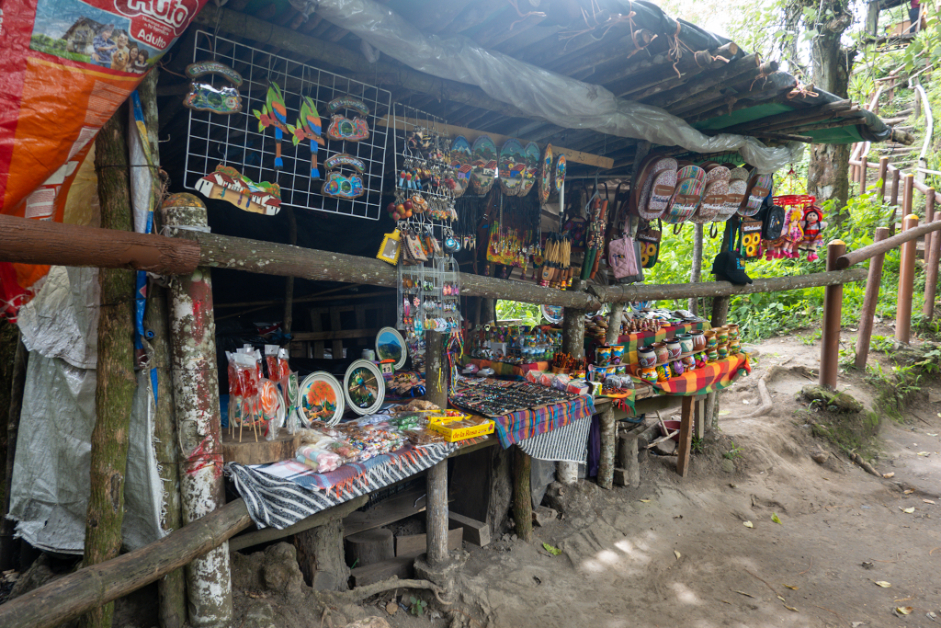
- There are places to get food and drink outside the entrance and there are toilets by the car park.
- To get back to Santa Tecla it’s probably easier to get in one of the blue trucks as buses aren’t regular.
- They’re standing room only but there’s plenty to hold onto.
- Check with the driver where he’s going and pay when you get off. It’s 50c each.
- You can pick up a 101B back to San Salvador along 4a Calle Oriente.
- The Moovit app told me that the 101D would have taken us from the Metrocentro (Blvd. Los Heroes) to Santa Tecla but it was a convoluted route, plus Moovit is a bit hit and miss. It hasn’t always sent us in the right direction in Central America.
- To get to Joya De Cerén head to Terminal de Buses de Occidente and ask around for the 108 bus.
- The 44 will take you from Metrocentro to the terminal (but not right inside, get off on the main road around 13.692841, -89.216952) for 25c.
- The 108 will drop you right outside the ruins. It cost 76c each and took about 90 minutes.
- To get from Joya De Cerén to the Ruinas De San Andrés you need to get back to the roundabout on the 108 then walk up the highway towards the ruins.
- We found a bus stop at 13.784421, -89.377371.
- Pretty much any bus will drop you outside the ruins from here, it’s only three kilometres away.
- It cost 50c which was the minimum fare on the bus we took.
- To get back to San Salvador just wait for any bus on the other side of the road to the San Andrés Ruins.
- The bus from Santa Ana stopped for us and it cost a dollar to get back.
- Joya De Cerén costs US$10 each for foreigners including the museum.
- San Andrés cost US$5 each.
- Neither sites open on Mondays.

