We weren’t going to come to Suchitoto, it wasn’t on our radar until a few people in a Facebook group mentioned it was pretty and we had a couple of spare nights to use up. Why the fuck not, hey? San Salvador saw us off with a light rain which continued all the way to Suchitoto but it brought the temperature down to manageable so we just enjoyed our brains not boiling in our skulls for a while.

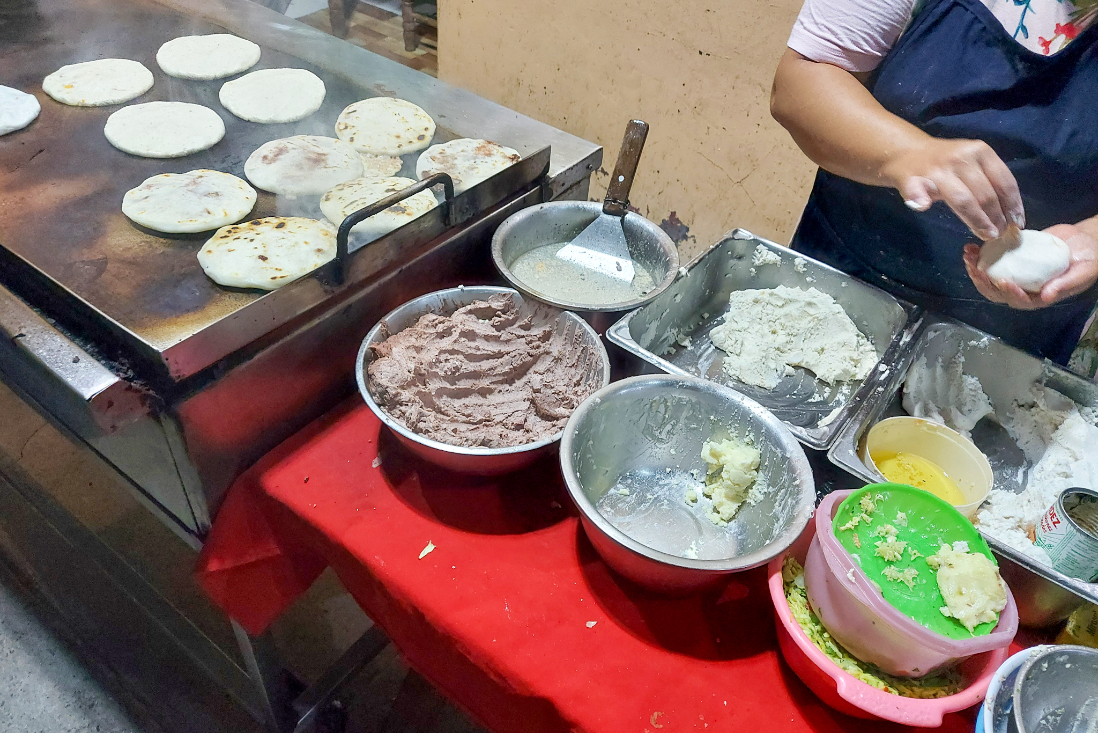
We had a nice, chilled afternoon just wandering around the town, locating our new favourite pupusa stall, checking out a viewpoint, the usual tourist shit. But ah yes, pupusas. You need to know about these bad boys. They’re little discs of joy and you’ll see them everywhere in the morning for breakfast and the evening for dinner. We’ve fallen quite nicely into this routine, having our main meal at lunch from a comedor that displays the cooked food in a warmer. I’m rather taken with pupusa revuelta which is pork, bean paste and cheese, whilst Tarrant has it without the cheese. An essential part of the pupusa experience is the curtido which is pickled cabbage slaw, and a natural tomato salsa. I’m really not sure how I’m going to readjust to life without pupusas when we leave El Salvador.

After a bit of a wander we found ourselves in a clothing shop called Arte Añil which consisted entirely of garments dyed in indigo, which is actually blue, and I’m so very attracted to blue shit. Arte Añil means Indigo Art. So indigo naturally comes from a plant and the Mayans cultivated a lot of it. It was important to them and they used it in rituals, paintings and ceramics. When the Spanish rocked up they exploited the fuck out of this “blue gold” with El Salvador producing the overwhelming majority of the plant in Central America, and this all went well until someone worked out how to create the colour artificially. After the civil war production began again, largely in Suchitoto, and now you can buy these beautiful dyed works of art, or you can dye something yourself. So I did.


Irma who owns Arte Añil runs one hour workshops. First she explained how they extract the colour from the plant. It’s done in something called an obraje which are large concrete vats. The leaves have to be soaked in water and pressed for up to 22 hours then the resulting green liquid is drained into a second vat where oxygen has to be introduced. These days they use pumps but traditionally they’d stir it for three hours. This is what turns it blue. Then it just sits there for eighteen hours so a blue sludge can settle on the bottom and this is what they dry in the sun then grind to a powder.
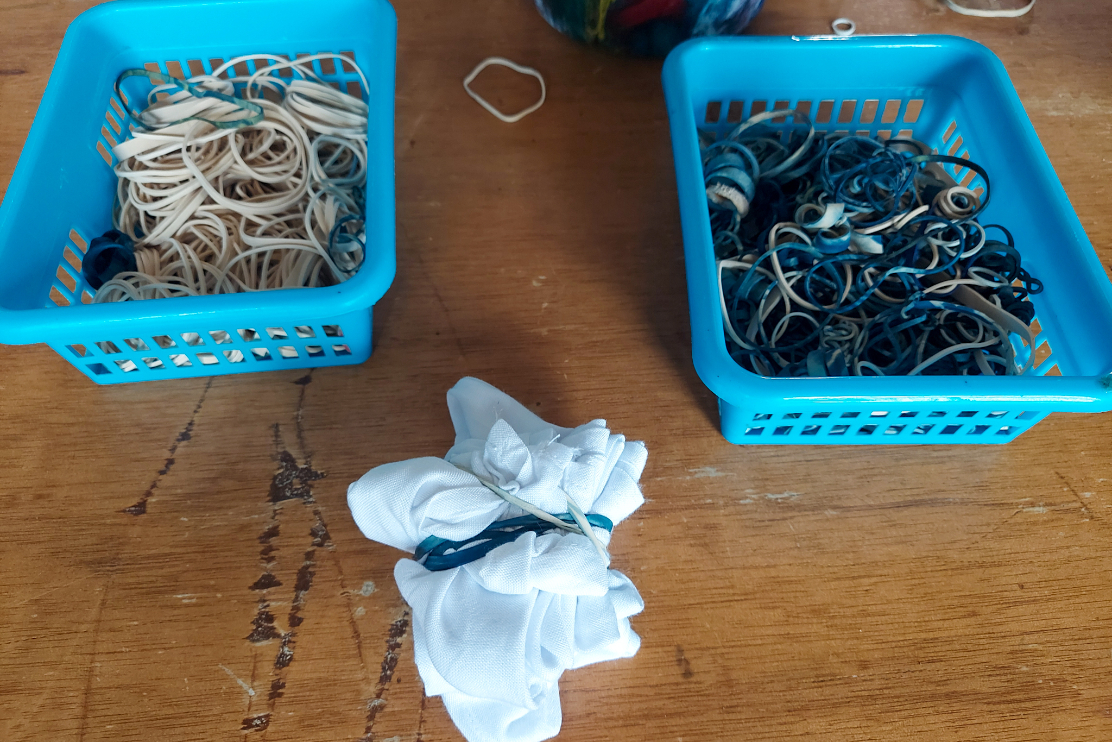
Then we got down to business! Irma showed me how to fold a cotton scarf (you can only use natural fabrics with natural indigo) and I tied two elastic bands around it, then I wet it in plain water, then we she led me to a big, plastic rubbish bin. She was about to take the lid off when she turned to me and said, “The smell, it’s… not good…” Oh my fucking gosh, she wasn’t joking either. Indigo is very pretty but the stench of it! It stinks like sulphur. But I wanted my lovely, indigo souvenir so I sat down and stuck my little bundle of cotton into the bog of eternal stench.

So it’s not as easy as sticking it in and moving it around (that’s what she said), you’ve got to manipulate the fabric to get the colour right in there then when you take it out it’s not blue at all. It’s green. You remember during the extraction you have to get oxygen into the green liquid to turn it blue? You have to do the same and guys, it turns blue right before your eyes like smelly magic. You manipulate the ball of fabric, getting into all the corners, then repeat as many times as you want to get the desired colour. I like dark blue so we dipped it three times, took one elastic band off then dipped it twice more. It’s quite meditative. She did say if she’d had a stressful day then sitting down and doing some dying can sooth her.
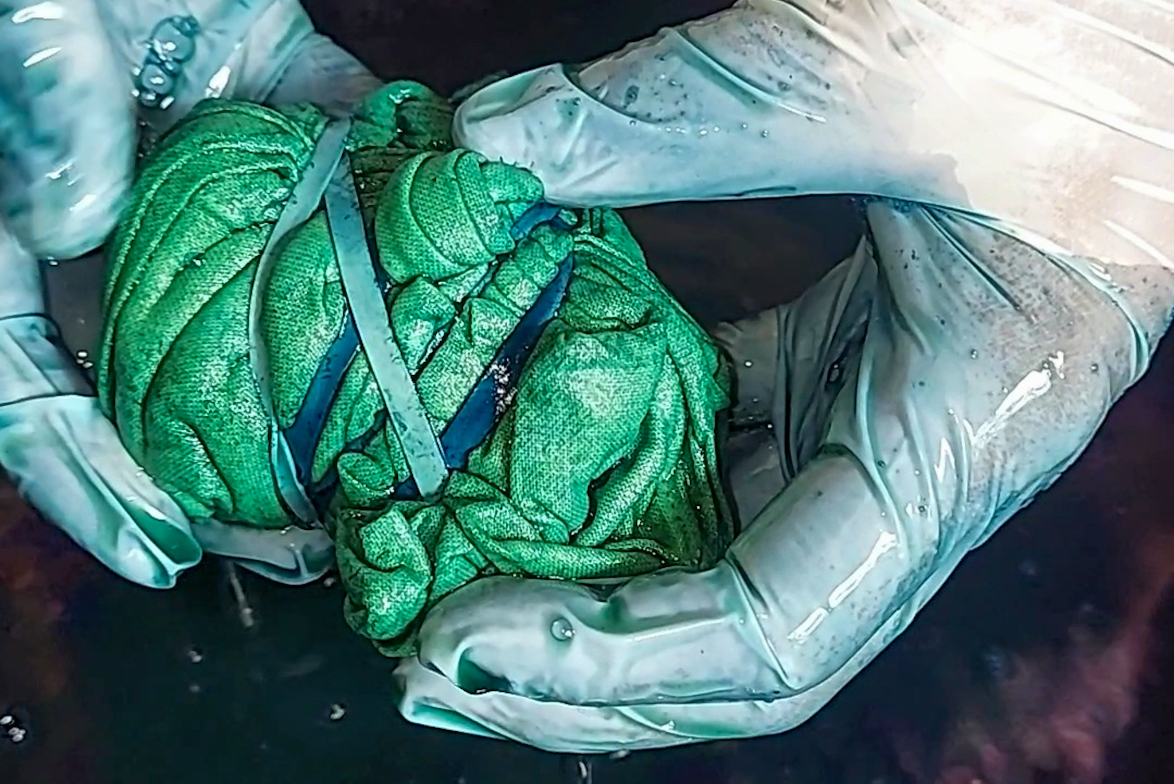

Once you’ve dipped it as many times as you like, or as many times as your nasal passages can handle the stink, you can untie it and I was well chuffed with the results. I do love a bit of tie dye and now I could override Tarrant’s dislike of fabric wall hangings because this was a legitimate craft souvenir that I made and could now display, because yes, I have the maturity of a five year old and you WILL put my shit art on the fridge before I have a tantrum. We quickly hand washed it, Irma used an iron to dry it off a bit, then it was mine all mine to take home and put in a box because we don’t actually live anywhere right now.

Another thing to do in Suchitoto is have a little wander to Cascada Los Tercios, which actually isn’t usually a cascada at all but it’s worth a look because it’s really not far from town at all. They’ll tell you it’s 1.5 kilometres and it is if you’re a crow but us grounded mortals have to walk 2.5 kilometres. It’s an easy walk though. The Lonely Planet says don’t go alone as there have been robberies, my research said you’re best off going with the tourist police who accompany tourists at 3pm, but none of this was recent and things are different these days. Three different people told us it was very safe to go on your own; the woman who owns the hostel we were at, the woman in the tourist information office, and Irma at Arte Añil. In fact I don’t even know if the police still escort tourists at 3pm any more, no one mentioned it, so off we fucked all by ourselves in the morning. Didn’t get murdered or anything.
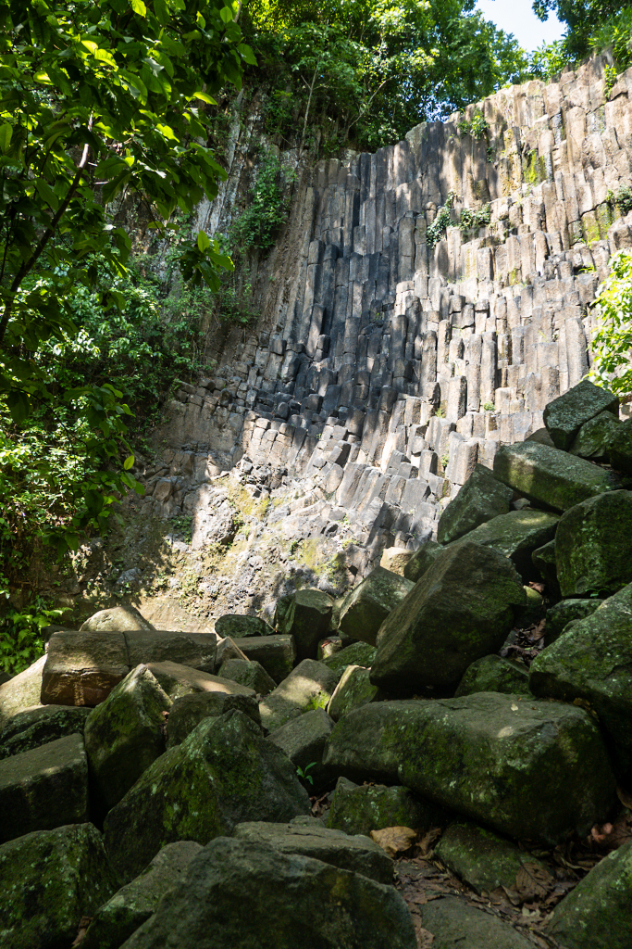
You pay your entrance fee to a friendly chap who’ll give you directions to a lookout and to the waterfall but he did tell us there was no water in it right now. It’s a shame as it would have been spectacular with water but even without it’s a natural work of art in itself. The area is made up of hexagonal volcanic basalt columns which happens when lava dries then cracks. Over time erosion and movement twists and separates them into these striking formations. What would have been the face of the waterfall is made up of vertical columns and to the right are horizontal columns and you realise you’ve been scrambling over big chunks of these columns that have broken away. It’s quite epic.
The viewpoints are stunning too affording cracking views of the nearby man-made lake. We did consider a little jaunt to the lake but Tarrant read that it was pretty fucking toxic so we decided to just admire it from afar where it couldn’t accidentally get into any of our head holes. We chilled at one of the viewpoints for a good while, they’ve built a little gazebo type thing so there was shade from the sun, then grabbed a cold drink from the basic café an enterprising local has set up near the entrance and shuffled back to Suchitoto.

So yeah, I’m pretty pleased we came here, it’s been an absolute delight. It’s a gorgeous little town with plenty of places to eat and drink. Everyone here is really lovely but that seems to be a running theme in El Salvador. We’re already regretting only allocating ourselves two weeks but we have an end date for the trip now which does mean less meandering, more itinerary. Maybe we’ll pop back some day.
Jump to “Useful shit to know…”
 Suchitoto, Cuscatlán, El Salvador
Stayed at: Terrazas Guesthouse, Suchitoto

Useful shit to know…
How To Get From San Salvador To Suchitoto By Bus
- By far the easiest thing to do, especially if you have luggage, is take an Uber to the Terminal Plaza Amancer and take a full sized bus to Suchitoto.
- The Uber cost US$6.19 from Metrocentro by this can surge up to US$9 or US$10.
- If you don’t have a lot of luggage or give no fucks about cramming yourself and your possessions onto a bus packed with an immovable sea of flesh and hair, the 29 bus will take you from Metrocentro to Nueva Terminal. Same terminal, it’s just called a slightly different thing. It’ll cost 35c per person. Position yourself by the back door if you can so you don’t have to battle to the back to get off.
- The full sized 129 and the slightly smaller 140 to Suchitoto leave from bay 2. It took about 90 minutes and cost US$1 each.
- I’d read that the 140 minibuses no longer go to Suchitoto but you could still get the bigger buses from the Centro Historico outside the Mercado Municipal Ex Cuartel. I went to ask about it when we were there but I was told we had to go to the Nueva Terminal. Having said that, my Spanish is pretty awful so if yours is better it might be worth going to speak to someone around coordinates 13.698638, -89.187804 and see what they say.
- The 140 bigger buses still go to Suchitoto, definitely from Terminal Plaza Amancer, you’ll have to check with regards to Centro Historico.
- If you want to dye something with indigo, Irma runs workshops at 3pm from her shop, Arte Añil.
- It’s US$35 and lasts about an hour. You dye a cotton scarf which you get to keep.
- You can easily walk to Cascada Los Tercios from town, or you can get a tuk tuk or a tiny red car to take you. I’ve been told this costs a dollar.

- The entrance fee is US$0.50.
- There wasn’t water in it when we went despite the recent rains. I don’t know how much it has to rain before it flows.
 Travel & Shit