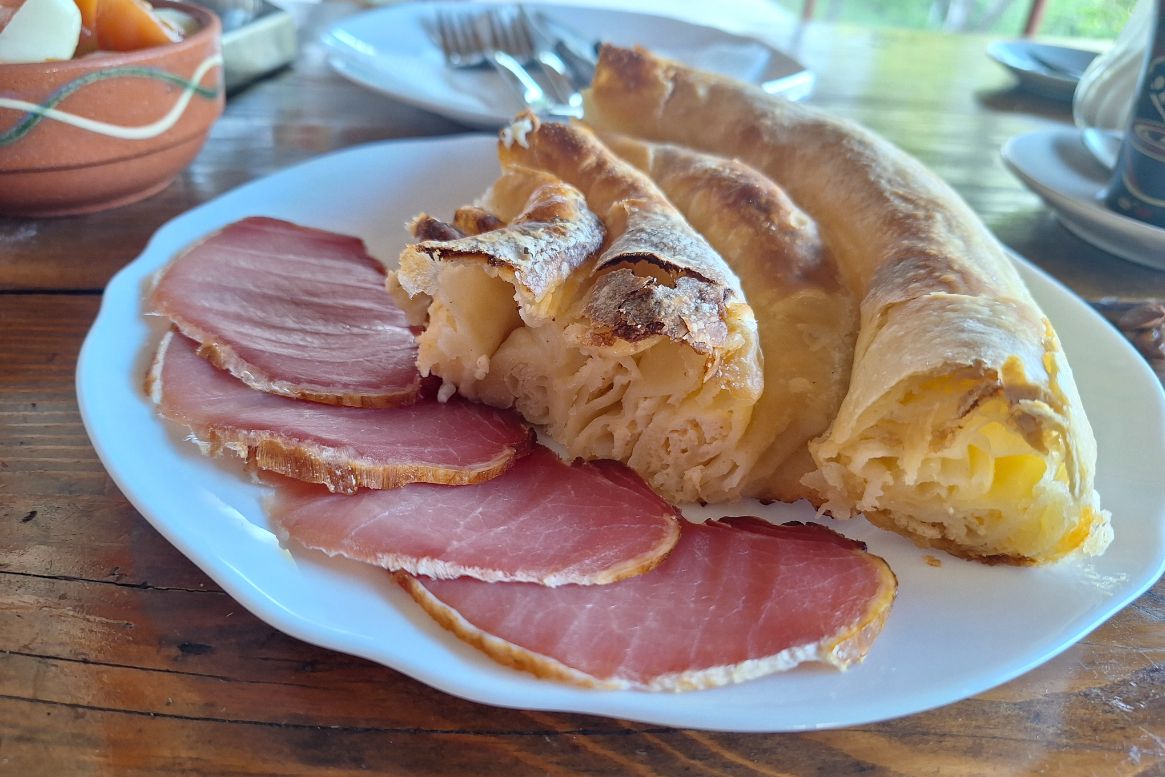
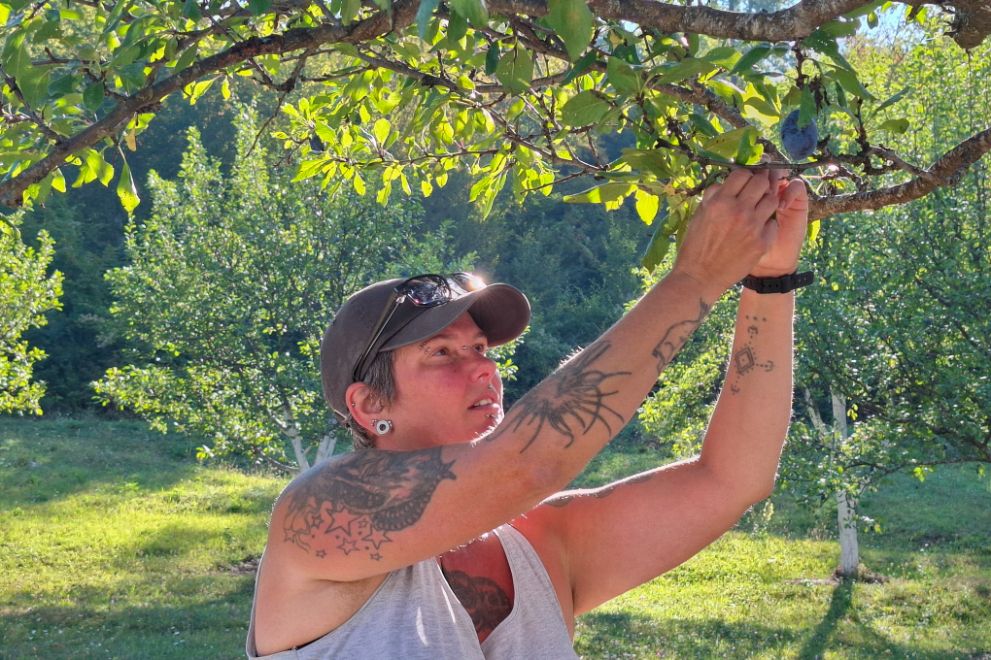
We need to talk about burek. I could eat this shit all day. It’s a flaky pastry stuffed with meat, or spinach, or cheese, or whatever. We first had it in Virpazar, little cheese and spinach triangles and tiny cheese spirals. But this morning our host baked a massive cheese spiral for breakfast and it was fucking awesome! Far too filling, we packed up what we couldn’t eat so we could have cheesy snacks later on. We had that with smoked ham and plums from their trees, and the strong, Balkan coffee they’re so fond of here. That set us up for the day and it was only €10 per person.
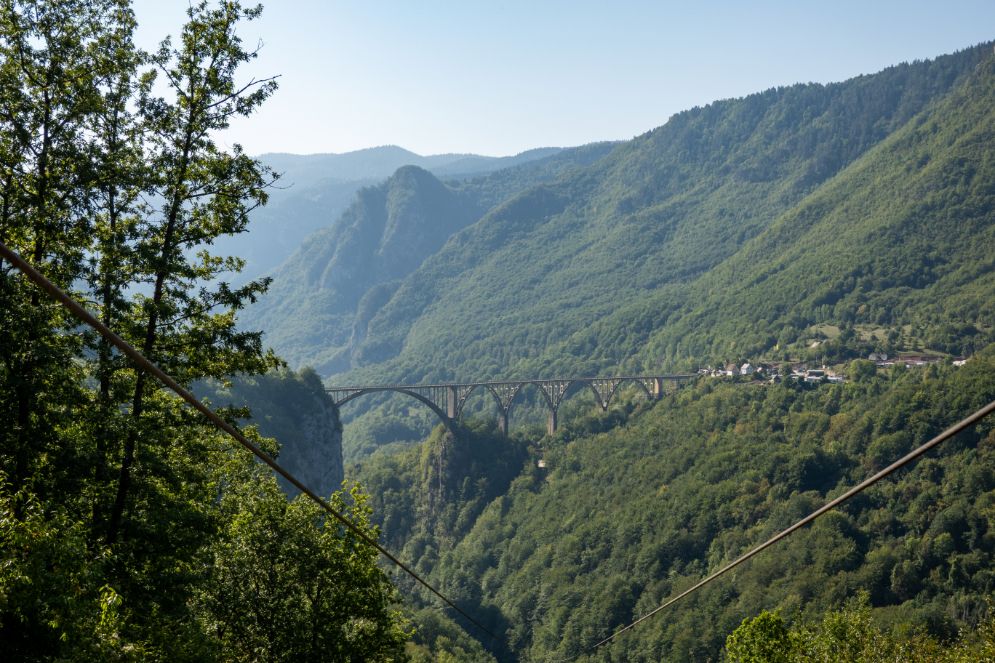
The two things we wanted to do in the Tara Canyon were white water rafting and ziplining. Okay so I wanted to do the former, Tarrant is still a little bit too aware of her own mortality since the Segway incident so she’d already planned to sit this one out. Thing is though, the water was so low I wasn’t even sure they’d be running rafting tours. Turns out they were but it was described as “Not extreme. Just… *shrugs*… standard.” I’ve done a bit of tourist rafting so if I’m going to fork out for it I think I want it to be at least a little bit terrifying so I decided not to bother. Ziplining, however, requires exactly zero water. We duly rocked up to the start of the Extreme Zipline Tara where we stood on the platform and looked over the stunning canyon to the bridge. Oh. Now that’s very high up. A few of my internal organs started trying to migrate to parts of my body they had no right being as I took a few deep breaths.
Yeah so I’m pretty uncomfortable around heights but, paradoxically, I’m very fond of adrenaline things that put me very high up. I don’t know why. I think I started doing it to try and get myself over the fear of heights and it turned out I liked it. Not the being high up bit, that still makes my bumhole twitch. But once I’ve been strapped in by a professional (not a euphemism) I’m more than happy to throw myself off whatever I’m standing on and let gravity rearrange my facial features. And strap us in he did! Then we had to wait because the access road to the other end of the zipline was blocked on account of works happening on the bridge. This gives you plenty of time to question all of your life choices. It was only temporary though. It wasn’t long before we were teetering on the edge and being given instructions on how to position our bodies, when to lift our legs, and what to do if (when!) we stopped about five metres before the end.

“Grab onto the cable!” he told us. “Grab on straight away, it is not dangerous, we can help you get to the end. But if you let you go will slide back 200 metres!” Okay. Got it. Try not to get yourself stuck in the middle of a kilometre long cable. Easy. Then off you fuck and it. Is. Awesome! There is more than one zipline in the Tara Canyon and, in fact, Montenegro. The country is mad for a zipline. But this is the longest at 1050 metres, and the fastest at 80 to 100 kph. Obviously we both stopped a few metres from the end and a device was sent out for Tarrant to hold onto and I grabbed onto the rope. We were pulled in by a very tall man. Lots of men in Montenegro are very tall, we hadn’t noticed until we’d overheard a couple of very young, skinny British lads talking about it. But yes, the younger generation are giants of men, ideal for hauling in two slightly overweight lesbians who got themselves suspended over a canyon and paid good money to do so.
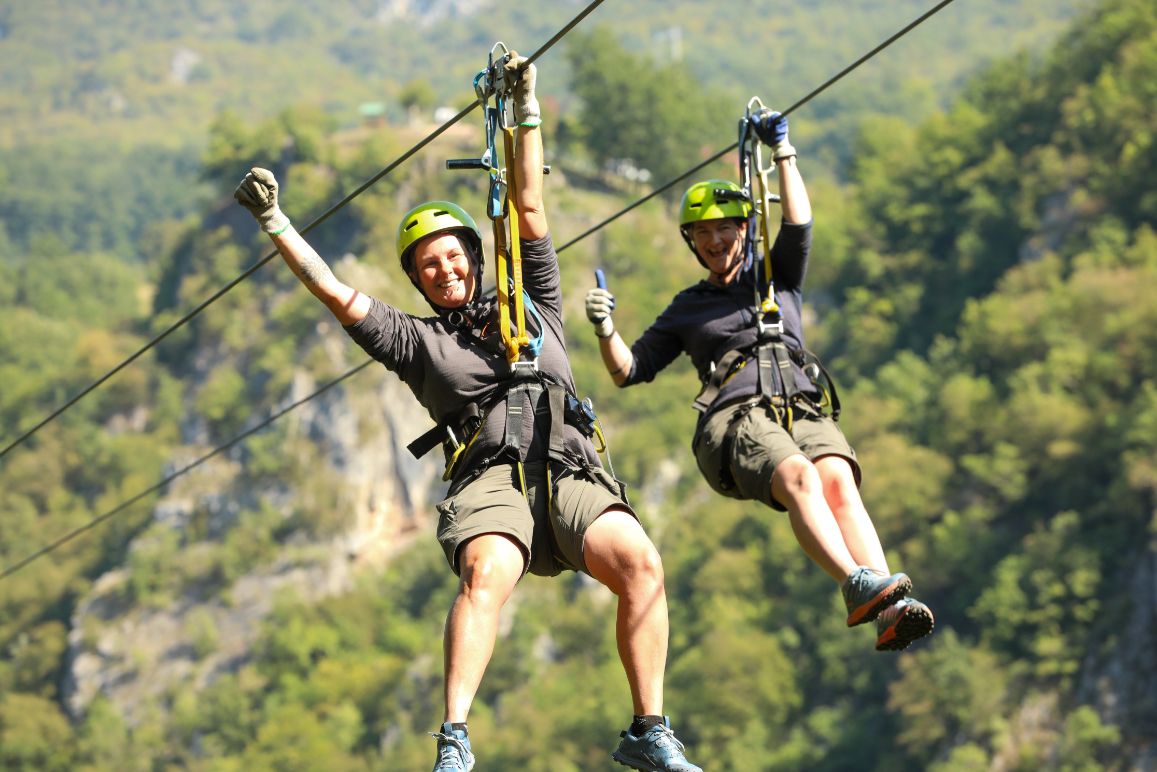
Well that was fucking brilliant. Very much enjoyed that. We bought the optional professional photos and waited for a few other tourists to come down before we were driven up to the road, transferred to another vehicle and were taken back to our car. The place where we transferred vehicles is where I originally thought we’d go to get on the zipline until we passed a giant sign pointing us to the start and followed that instead. You can actually sign up at the other end and, in fact, this is an ideal place to park if you want to walk over the bridge for some epic canyon views so we went and did that. It also caters to all of your souvenir and obnoxiously strong alcohol needs. Also honey. I’ve noticed that these pop up souvenir stands always sell magnets, other trinkets, rakija and honey.

So the Đurđevića Tara Bridge to give it its full name, or Most na Đurđevića Tari in Montenegrin, is a terrifying 172 metres up so I don’t know what made me think walking to the middle of it would be any manner of fun. The views are worth it though but it does make you realise how crumbling it is. The concrete railings had chunks missing, exposing the rebar underneath. They’re doing some work on the bridge at the moment which is comforting.
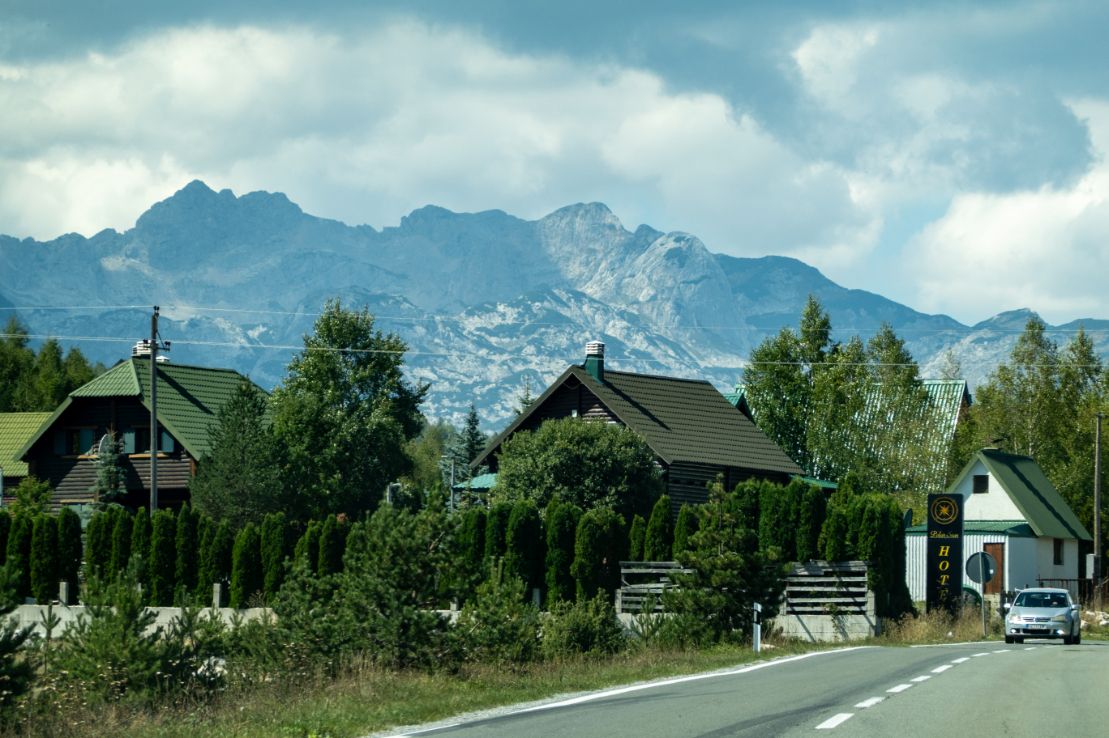
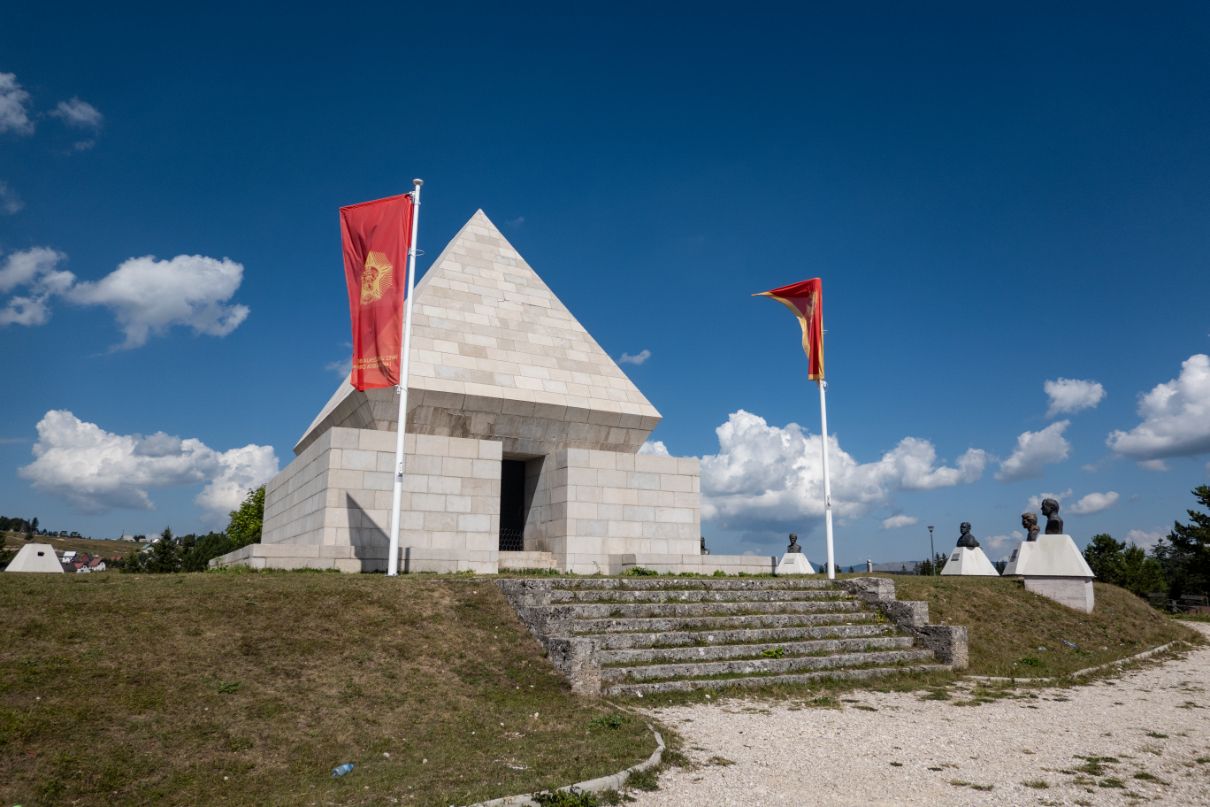
We got our photos and edged our way back to the car and headed on towards Žabljak where there is, of course, a spomenik so we parked up to look at that. It was a good one, well kept with busts of the fallen soldiers surrounding it. I like this, it’s more personal than a plaque full of names. You can put a face to the Yugoslav Partisans who died fighting fascism. It hits a bit differently.
Just outside of Žabljak is Crno Jezero, or Black Lake in English, within the Durmitor National Park. We’d originally intended to stay at a nearby campsite so we could have the place to ourselves the following day like with Biogradsko Jezero, but with Tarrant struggling with the tent and the fact we had extra time to kill with us not doing the rafting we decided not to. This would actually give us a full day tomorrow where I didn’t have to drive if I didn’t want to. Fuck me, it was busy though! Thankfully with more parking available than Biogradska Gora. We slotted the car into the first available space, paid a man for the privilege, then headed to the lake, brandishing our national park annual passes as we went.
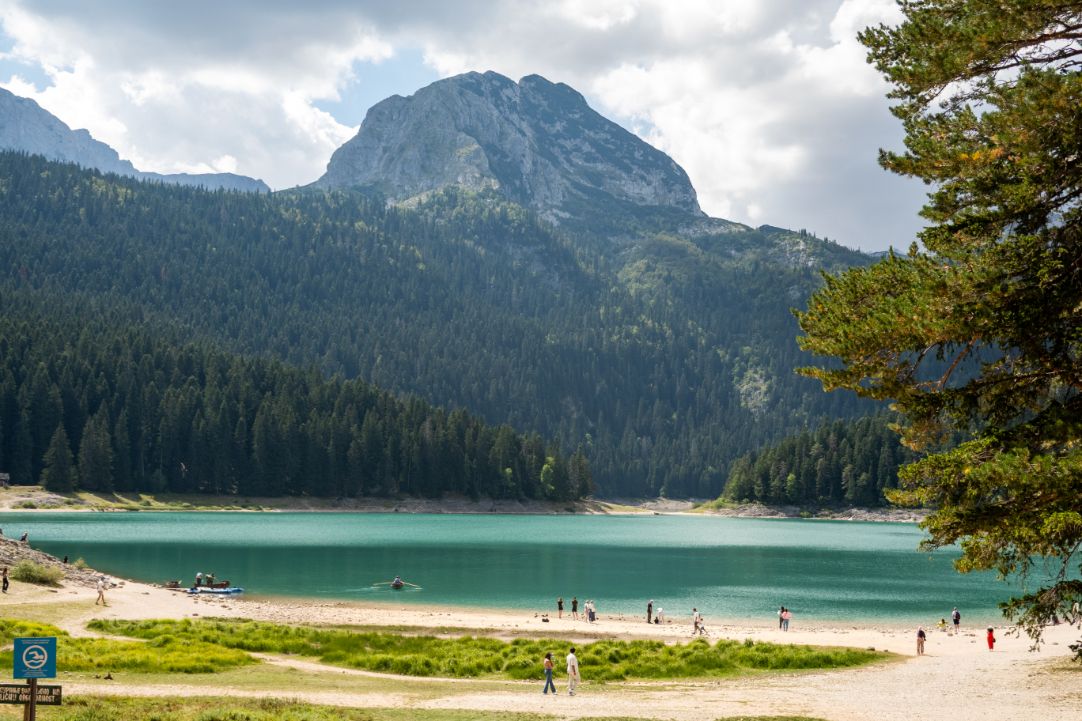
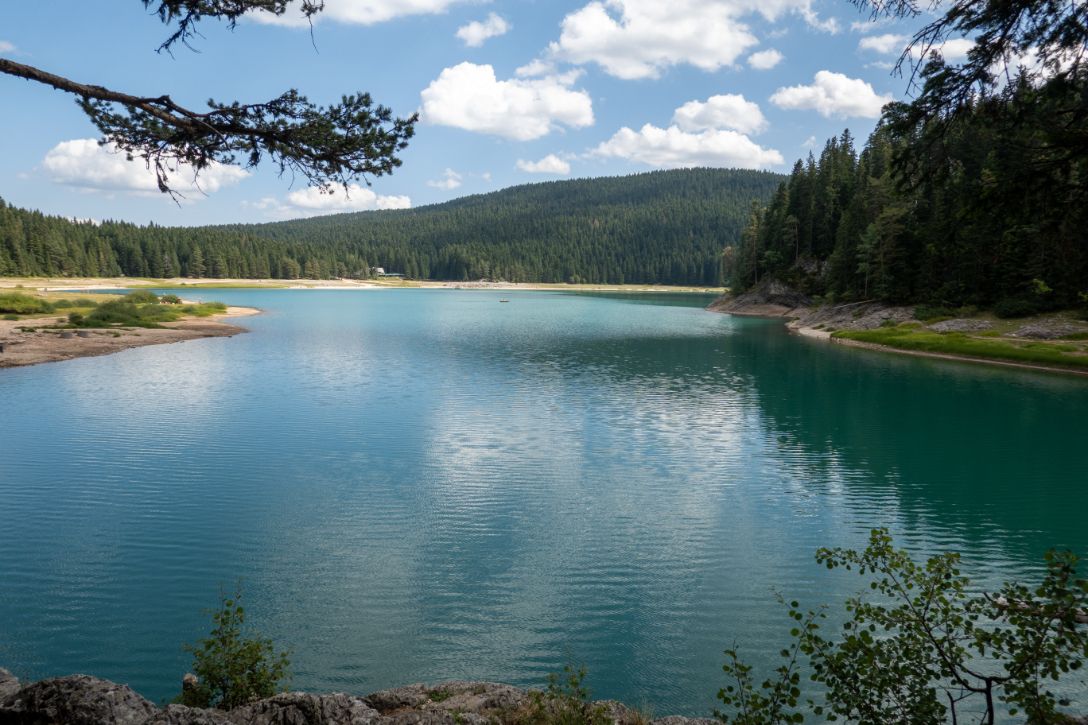
It’s a beautiful lake with a gorgeous mountain backdrop but, as with everywhere else, water levels were low. We set off on the short walk around the lake, stopping regularly to gawp at the vibrant blue of the water and mountain tops poking over the top of pine-filled hills. What an absolute dream of a place. The trail is over pretty easy terrain, you just have to keep an eye out for the odd root or rock which wants to see you face down in the dirt, until you get to a sign reading: PAŽNA! WARNING! OPASNA STAZA! DANGEROUS TRAIL! Okay… how dangerous are we talking? Like, just a few extra rocks to be careful of or are we going to have to procure helmets and rope up? Tarrant was apprehensive given her leg but we’d been doing some decent hiking back home up and down some pretty batshit hills. We decided to just do it and if it got too hairy we’d turn around.
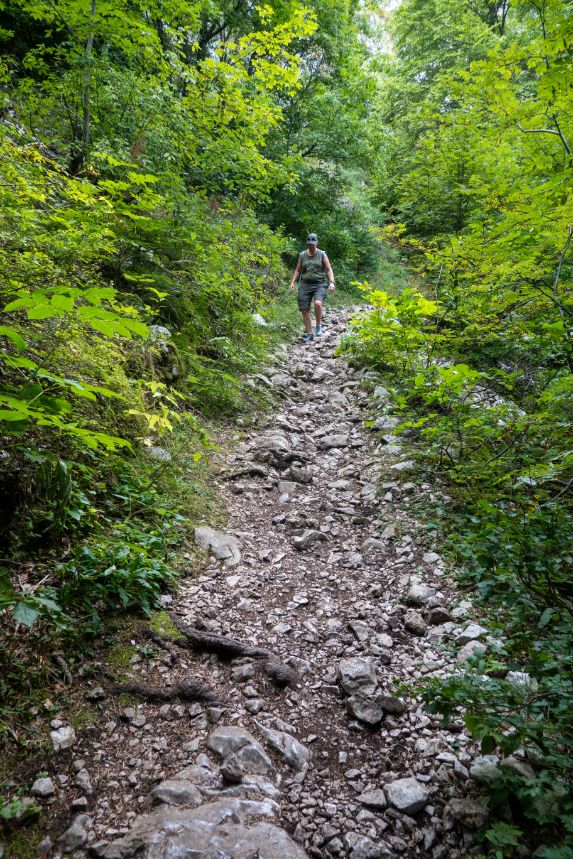
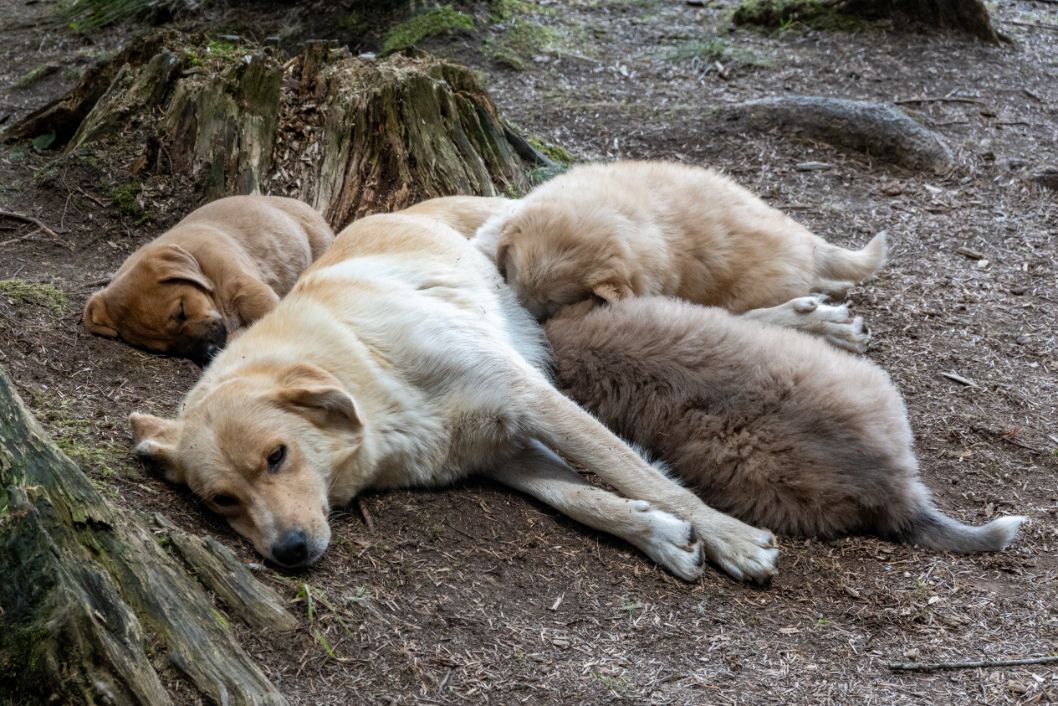
It’s actually fine. It’s still something your average tourist could manage, I think they’re just being a little bit dramatic with that sign. We passed all manner of people from the elderly to the very young and no one seemed to be having an awful time. Apart from one German chap. He did seem to be questioning his definition of a nice holiday as he struggled, step by step, down a uneven bit. There were some very rocky sections and some steep bits but nothing that required any manner scrambling or anything else our travel insurance wouldn’t approve of. I really enjoyed it, it’s a great walk. We finished up at a café, sat down for an iced coffee, and just drank in the scenery. On the way back to the car we picked up a couple of souvenirs from the vendors lining the road because tourists gonna tourist, then off we fucked to our home for the next couple of nights.

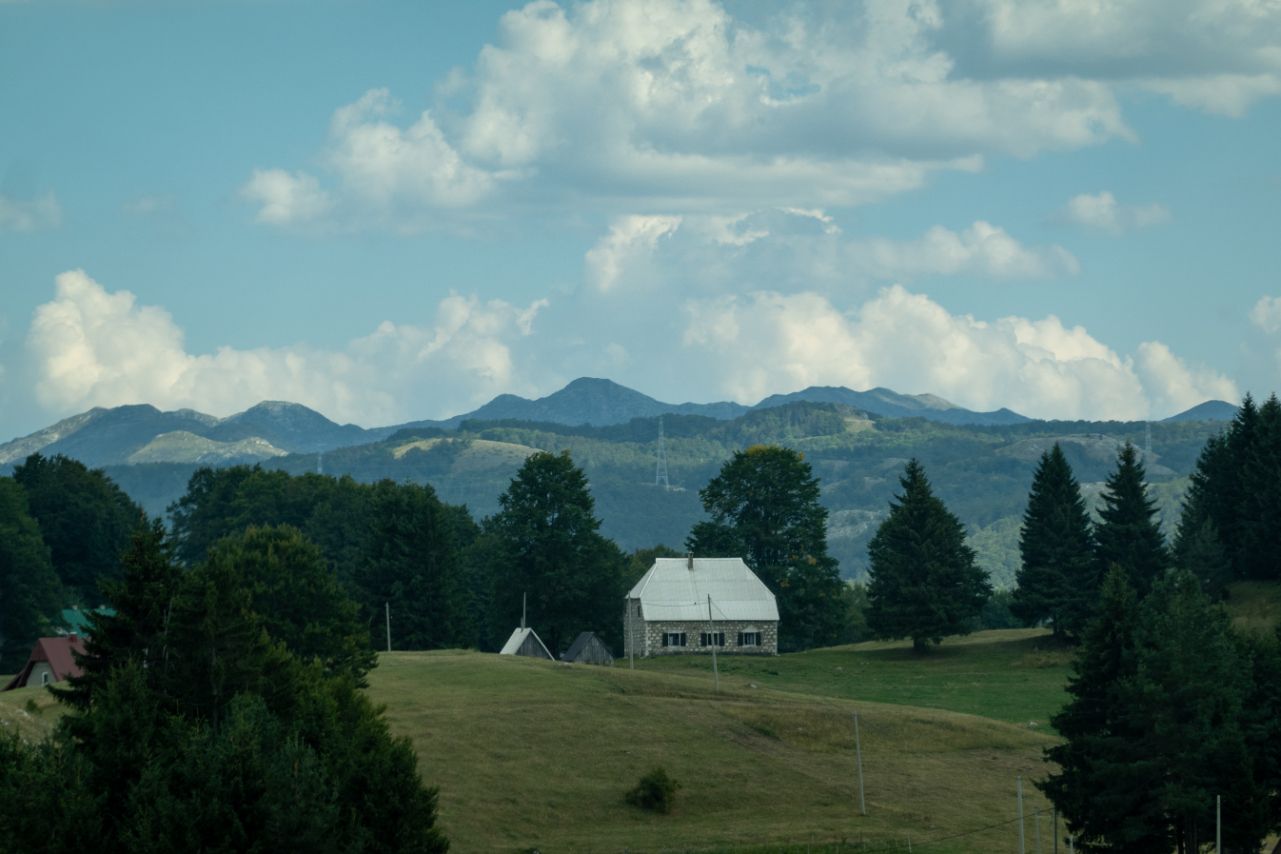
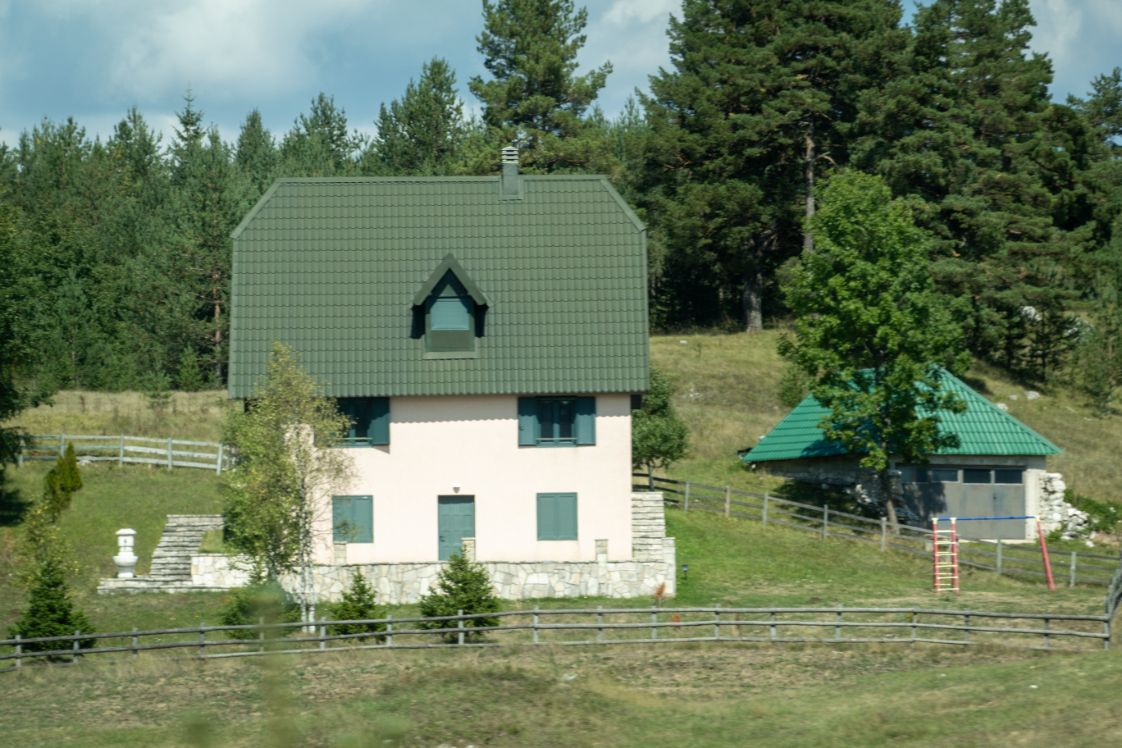
We drove to Plužine the long way round. Any excuse to put an extra spomenik in our eyeholes. The original plan was to go to Plužine via the northern section of the scenic Durmitor Ring drive but just reading about the narrow roads and lack of safety barriers sent my heart to my throat so we decided to bin that off in favour of not nearly dying. It’s still an absolutely beautiful drive but I don’t think you can point your seeing-tackle anywhere in the north of Montenegro and not be impressed. The houses up here are a bit different to the south, with steeply sloping roofs which we assumed was something to do with helping the snow just slide off without putting too much stress on the structure. I bet it’s fucking stunning up here in the winter. Not going to lie, I wouldn’t even attempt to drive it but if someone wanted to bring me up here in a 4WD so I could sit by a fire and drink brandy I wouldn’t be upset.
The spomenik we wanted to see was the Dola Memorial which, and I didn’t know this until we got there and read the information boards, doesn’t remember Partisans or fighters. On the 7th July 1943, over 500 civilians just going about their day were massacred by the 7th SS Division and that’s who this monument was built for. People were told they wouldn’t be harmed if they just gathered with their livestock, they thought they were going to be photographed, given papers, then sent back to their farming chores. Children were lured with candy. And then the Nazis shot them all, children first followed by the adults, and piled them into a mass grave. I won’t lie, I genuinely shed tears when I read the board at the bottom of a set of steps. It’s the account of a survivor, Dimitrije Đikanović who was 45 at the time, as told by his grandson, Dr Goran Jovanović. I’ll write the whole thing out at the bottom of this post because it’s worth remembering that the atrocities committed by the Nazis weren’t confined to the battlefields and the gas chambers.

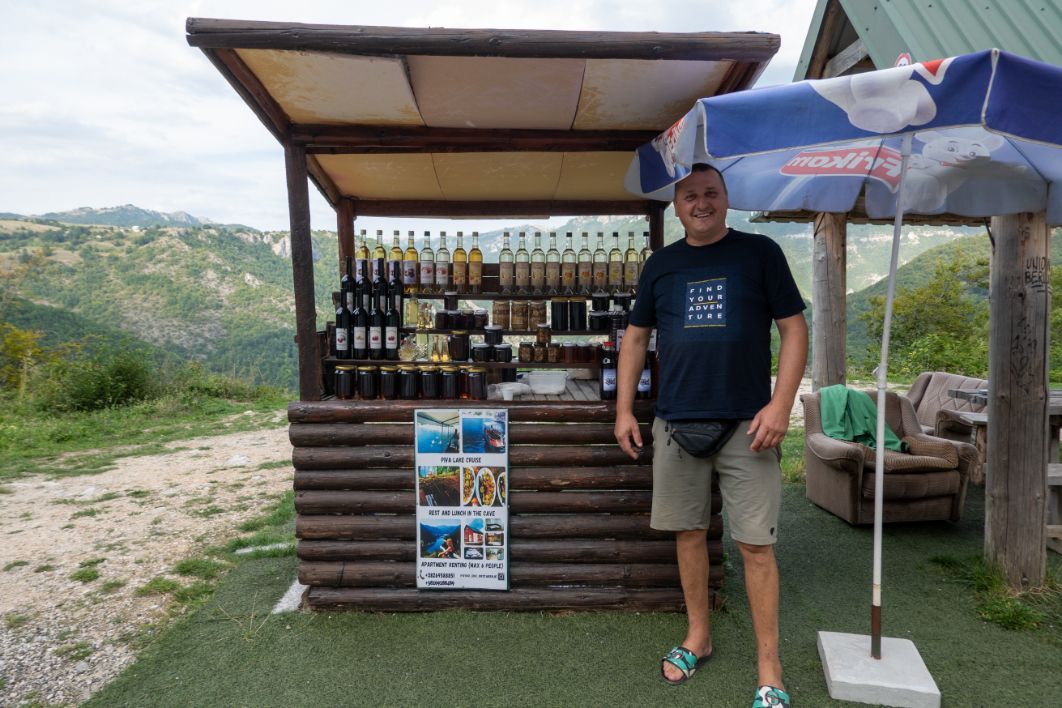
We didn’t have any more stops planned but Tarrant spotted a lake through the trees as we travelled along the road and I was able to quickly pull into a big rest stop with a cracking view over it. This place just keeps on giving, I swear. There was a guy selling things from a kiosk too so we wandered over to see what he had. It was the usual things. Preserves, booze, and he invited us to have a taste of anything. So you know how I said you can always buy rakija and honey? Well, turns the two can be combined into a drink called medovača and it is fucking delicious. I have no idea how strong it is, could be anything really, but I do feel whatever the proof the hangovers would be atrocious. We paid him €15 for a bottle, I’ve no idea if that’s the going rate and nor do I care for it is the nectar of the gods. He actually seemed surprised and delighted we bought something.
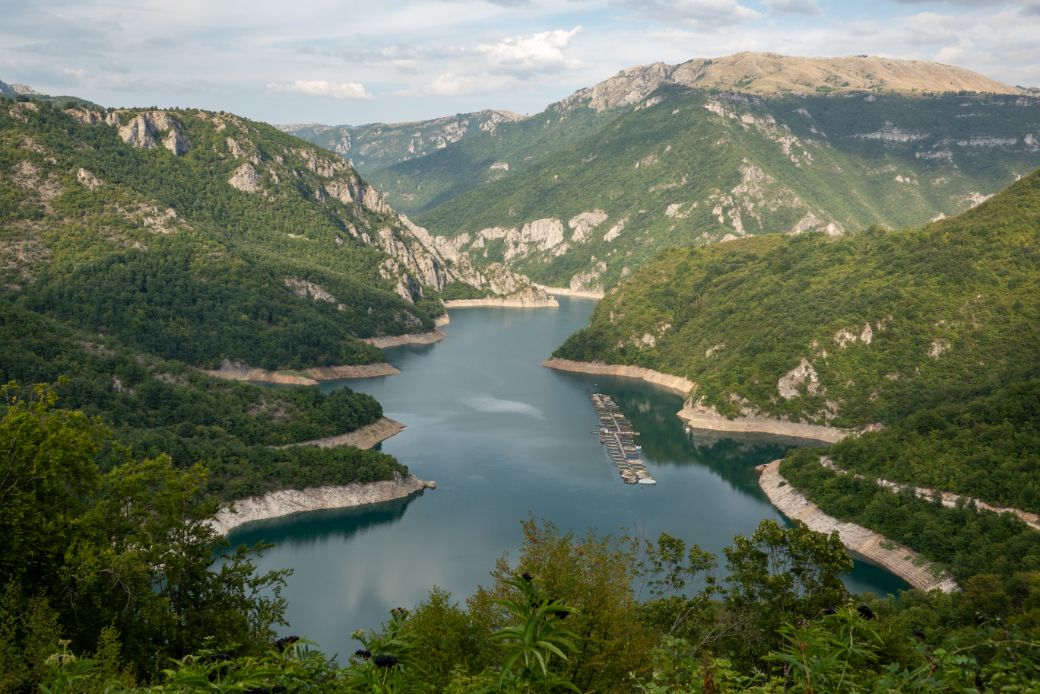
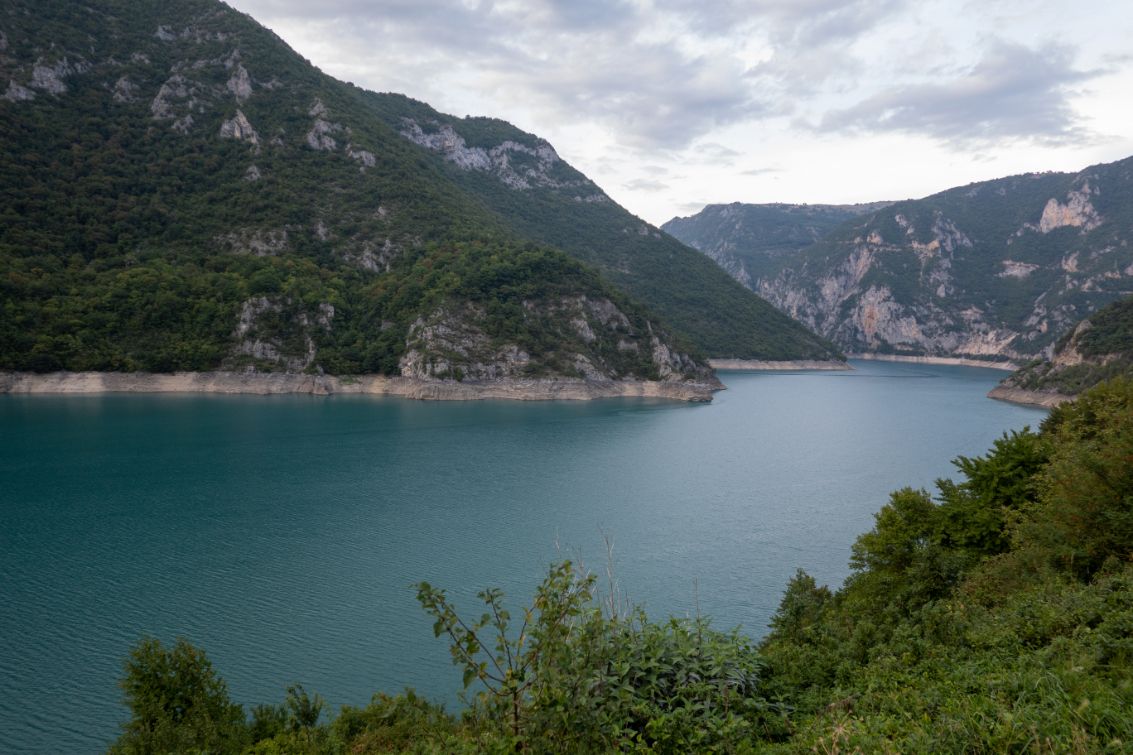
Right then. Onwards to Plužine. We’d booked an apartment in the town and the woman who let us in took payment and produced a bottle of rakija from the fridge for us to have a shot as she did the registration for us with the app. Actually we didn’t shoot it, the woman at the last place told us to sip it and I’m glad she did. I’m British, you hand me anything in a mouthful-sized vessel and I will try and fit it all in my mouth in one go. I would have melted my oesophagus. Once that was done we had a spot of dinner then headed out to enjoy a beer with a view as the light faded. We found a bar with a terrace overlooking part of Piva Lake and sank a couple of Nikšićkos until the temperature dropped.
The Massacre At Dola
June 7, 1943. Operation “Schwarz.” Babin Peak, Piva. High up in the mountains, beneath conifer trees, refugees sought shelter in makeshift huts known as katave. There, crowds of children, women, and livestock took refuge at the Fifth Enemy Offensive raged on Sutjeska.
Some predominantly blonde haired soldiers have arrived. German can be heard, and our language too. They shouted, “Gather! Gather!” They assured the people that no harm would come to them if they assembled with their livestock and followed orders. Supposedly they were to hear proclamations, be photographed, receive documents, and return to their summer farming tasks. They lured children with candy, but unease spread among the group. Left with little choice, the people formed a slow-moving column and began their trek toward Miljkovac and then to Dola. This tragic procession consisted of families and livestock moving together. Sheep bleated frantically, cattle mooed, horses neighed and an eerie, panic-stricken animal cacophony mixed with the cries of children seeking their mothers.
Ten-year old Tadija burst into tears; in the chaos, he lost his mother, brothers and sisters. His father comforted him saying, “Don’t cry, son, don’t be afraid.” He reassured the boy they had moved ahead and that he would catch up with them. The eldest son, 16-year-old Miro, had earlier found refuge with an aunt in Golija, while 13-year-old Julka, tending to the lambs, had by fate avoided capture. Forty-five-year-old Dimitrije Đikanović from Rudinice feared for his family.
Among the column was Dimitrije’s 35 year old brother, Mališa, a mighty Montenegrin, a giant of a man, with his pregnant wife, Mitra, in her ninth month, and their three-year-old daughter, Radislavka. Another brother, Milun, had gone to chop wood that morning and was absent. Milun’s wife, Milenka, was there with their three sons—Radonja, Milutin and Isailo. The youngest was three years old. Hundreds of souls gathered from the villages and refugees of the Piva region were being escorted by members of the 7th SS German Punitive Division “Prinz eugen” and the Ustasha to Dola Pivska for a bloody assembly. Dimitrije sensed terrible fate, saying, “All these people will perish today; my two eldest children will remain orphans.”
Dimitrije took advantage of a favourable moment, managing to somehow slip unnoticed out of the crowd and hide from the enemy soldiers. With dread in his heart, he later climbed a tree on a hill and, from a distance, watched as sinkholes in Dola began to fill. After some time, the sharp cracks of rifles and machine gun fire split the air, followed by piercing screams echoing through the mountains. Dimitrije helplessly witnessed his loved ones being slaughtered. Families Blagojević, Ðikanović, Glomazić, Nikolić, Pejović, Gutović, and many others from Piva were perishing. First, children were killed before their parents’ eyes, followed by the adults. When the gunfire ceased individual shots rang out as the wounded were executed. Only 35-year-old Miloš Glomazić miraculously escaped, wounded but alive, to spread the word of the horrors at Dola Pivska.
The Blagojević family suffered the heaviest toll losing 265 members including 153 at Dola. Forty-seven Ðikanovićs were killed, 42 of them at Dola. Some families were left without a single surviving relative to bury or remember them. In many families, only a few survived.
After the massacre, the June heat spoiled the spilled blood, and the land of Piva, in horrifying silent (sic), received its martyrs. The Nazi forces buried the victims in a mass grave covered with soil and stones. For years, the land in Dola bore the stench of death, and grass on the Nikolić remained uncut.
Days later, survivors returned to Dola to find and bury their dead. Dimitrije and his brother Milun, devastated, searched the pile of corpses, hoping to recognise any of their fourteen family members among the dead. The 15th victim was Mališa and Mitra’s unborn child.
The unbearable stench of accelerated decay pierced through the cloth placed over the nose and mouth. At the top of the corpses, my grandfather recognised the tall figure of Mališa. The dead brother had been struck by a burst of gunfire and finished off with a bullet to the head, then buried among the last. Together with Miloš Glomazić, he had tried to escape from the execution ground. Miloš pointed to the place where Mališa had fallen. From there to the execution ground, a bloody trail stretched across the grass. The villains dragged Mališa from there to a common grave. They decided to carry his body and buried him in Rudinice beside his two sons, Radomir and Jakov, who had died as infants before the war. Dimitrije couldn’t identify his mother, wife, five children, daughter-in-law with three sons, the other daughter-in-law with a daughter and an unborn child; they remained in Dola’s mass grave forever. From his family, only his two eldest children and and brother Milun survived. The burning and plundering were mere horrors compared to the suffering in Dola. Dimitrije never forgave himself for not attempting to save little Tadija. Both brother, broken by grief, began to wear black clothing and did not cut their hair or beards. Only after the war did both of them remarry.
Quietly, with immense sorrow and great strength of will, life in Piva was being restored. Dimitrije rebuilt his life with Sofia, of the Glomazić family, and had seven children, the youngest being my mother. By a twist of tragic historical circumstance, in an indirect and absurd way, I owe my life to the German and Ustasha gunfire. I will never, however, thank them for that. My grandmother Sofia also endured the tragedy of war. Her sister Pejka, married to Blagojević, was burned alive in her house along with six children. Her husband, Pavle Blagojević, imprisoned in Nikšić at the time, later found a charred child’s shoe among the ruins of his family’s home. He carried that little shoe in the inner pocket of his coat for the rest of his life.
Grandfather Dimitrije was a calm, composed, hardworking and honest man. Only he knew how he bore his immense loss, and he rarely spoke about it. In his sixth decade, he managed to rebuild his family and live to bury two daughters – one in childhood and one in early youth. During his son Miro’s wedding in 1957, relatives had to coax him into joining a dance. Tears streamed down grandfather’s face. He never danced nor sang again. A few years before his death, already in his eighties, he sat on a hill above the hut, looking at Dola in the distance, quietly crying. His wife asked him, “Why are you crying, old man, what’s wrong?” He answered sadly, “I regret that I didn’t stay and perish with my own.”
When I gaze at part of the Memorial Complex in Dola, at the statues of children holding hands, I cant’ help but recognise the crying Tadija and the terrified, small Simeun and Koviljka. I feel a certain sorrowful reverence, remembering my good grandfather Dimitrije Ðikanović and his words: “The richest man is the one who has preserved his family.” And I wonder what a person is made of and how much they can ensure.
Death gives birth to new life, and new life carries the eternal lament of Dola Pivska, passing on the harrowing collective memory to future generations.
Author: Dr. Goran Jovanović, grandson of Dimitrije Ðikanović
Jump to “Useful shit to know…”
 Žabljak, Žabljak – Crno Jezero, Žabljak – Plužine, Plužine, Montenegro
Stayed at: Lake City Apartment, Plužine

Useful shit to know…
- Extreme Zipline Tara is the longest and the fastest zipline. The turn-off for the start is around 43.158937, 19.293996. There are large billboards visible coming from either direction. Park up near the house and walk down to the platform.
- It cost €45 each. I actually don’t know if you can pay by card or not, we paid cash.
- A bloke will take photos of you with a big fancy camera and he charged €10 per person if you want them. They’re good quality.
- You can also sign up at the other end which is around 43.148794, 19.291428. This is also a good place to park to check out the view from the bridge. There are other ziplines here and you can look into rafting.
- There’s a restaurant here too but it has consistently terrible reviews!
- Black Lake/Crno Jezero is within the Durmitor National Park. Entry is €5 per person.
- We bypassed the queue to pay and showed the guy checking tickets our annual pass on our phones and he waved us through. No idea if we were meant to get it scanned at the kiosk or not but hey.
- The annual pass cost €13.50 each and gets us into all of Montenegro’s national parks as many times as we want until the end of the year.
- You can buy it online HERE. You need to enter your passport details and upload a photo.
- Parking was €9 for three hours or €15 for the day. I don’t know how they keep track of who’s paid and who hasn’t. We put the ticket in our window just in case.
- You can find more information on the Dola spomenik on the database.
- It can be found at 43.058403, 18.835975.
- The spomenik in Žabljak is at 43.155908, 19.12304.
- The viewpoint where we bought the medovača is at 43.100142, 18.822285. It’s worth a stop even if there’s no one selling anything.
 Travel & Shit